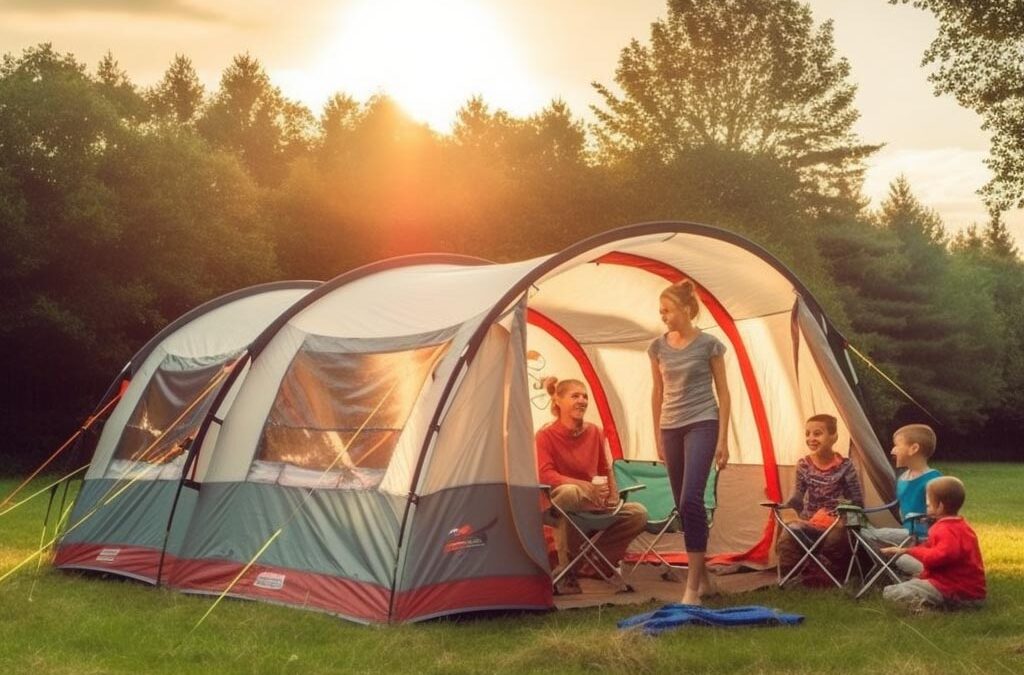
The Ultimate Guide to Family Tents

The Ultimate Guide to Family Tents

Let’s Get Camping!

Ah, the great outdoors. The smell of fresh pine trees, the sound of a nearby stream, and the feeling of dirt beneath your feet. There’s something truly rejuvenating about camping that you just can’t get anywhere else. But as any seasoned camper knows, a successful trip is all about preparation, and that includes having the right gear – like a family tent.

Why Family Tents are Important for Outdoor Adventures

Now some may argue that a family tent is not essential for camping. You could bring individual tents or even sleep under the stars if you’re feeling adventurous. But let me tell you from experience – there’s no substitute for having a cozy shelter to retreat to at night. A family tent provides privacy, protection from the elements, and most importantly, a sense of home in the midst of nature. Aside from being comfortable at night when sleeping outside on camping trips with your nearest and dearest ones can make it more unforgettable than ever.

Brief History of Family Tents

Tents have been used for thousands of years by humans as portable shelters. But “family” tents specifically didn’t come around until the early 20th century when camping became a popular recreational activity in America. The first family tents were heavy canvas structures with wooden frames that weighed hundreds of pounds – not exactly ideal for packing up and moving campgrounds! Nowadays we have an array of options to choose from like lightweight backpacking tents to spacious cabin-style tents with multiple rooms and even built-in screens to keep bugs out. All in all, family tents have come a long way since their origins but their purpose remains unchanged – providing shelter and comfort while exploring nature’s beauty!

Recommended Camping Gear

ItemLink
Tent footprint or tarpLink
Family tentLink
Tent stakesLink
Sleeping bagsLink
Camping chairsLink
LanternsLink
Portable stoveLink
CoolerLink
First aid kitLink

Choosing the Right Family Tent

Factors to consider when choosing a family tent (size, seasonality, material, etc.)

When it comes to choosing a family tent, there are several factors that you need to consider. First and foremost is the size of the tent. You want to make sure that there is enough space for your entire family, as well as any gear that you may bring along with you. Make sure to also take into consideration any potential growth in your family size or if you plan on inviting guests on your camping trips.

Another important factor is seasonality. If you plan on camping in colder weather conditions, it’s important to choose a tent that can withstand harsher weather elements. On the other hand, if you plan on camping primarily during warmer months, choosing a lightweight and breathable tent may be more suitable. Material is also something to consider when choosing a family tent. Tents made with lighter materials will be easier to transport but may not hold up as well in rough conditions or over time. Heavy-duty materials provide durability but can add significant weight and bulkiness.

Different types of family tents (dome, cabin, tunnel)

There are three main types of family tents: dome tents, cabin tents, and tunnel tents. Dome tents are shaped like domes and typically offer great stability and wind resistance due to their strong frames. They are lightweight making them easy for transport but they lack height which limits headroom.

Cabin tents resemble cabins and they provide ample vertical space with multiple rooms often featuring dividers for creating separate sleeping quarters or storage areas. They’re heavy-duty making them perfect for extended stays in campgrounds with large families but they’re typically less resistant against wind due their tall structure.

Tunnel tents have an elongated shape which makes them more aerodynamic than other styles of family tent design while also maximizing living space. They’re lightweight and can withstand windy conditions but they often require guylines and stakes to stay in place.

Ultimately, it’s important to look for a family tent that fits your specific needs and preferences. Whether you prioritize durability or lightweight materials, there is a tent out there that will suit your family’s unique needs.

Setting Up Your Family Tent

Step-by-step guide on how to set up a family tent

Setting up a family tent can be a daunting task, but with the right knowledge and tools, it can be done efficiently and quickly. The first step is to find a level surface where you want to pitch your tent. Make sure the area is clear of any rocks, sticks, or debris that may damage your tent. Once you have found the perfect spot, unpack your tent and lay out all the pieces.

Make sure you have all the necessary stakes, poles, and guylines before you begin. Start by assembling the poles according to the instructions provided with your tent. Then insert them into their respective sleeves or grommets on your tent body. Next, stake down each corner of your tent using either metal or plastic stakes.

Pull each corner out tight so that the sides are taut but not too taut as this will create unnecessary tension on the fabric of your family tent. Attach any guylines provided with your family tents to stabilize it in windy conditions.

Tips and tricks to make the process easier

Setting up a family tent can be frustrating at times, especially when you are dealing with multiple poles and guylines. To make things easier for yourself and everyone involved in setting up camp, here are some tips:

  • Practice setting up your family camping tents at home before heading out camping.
  • Invest in quality camping gear such as easy-to-assemble tents.
  • Use brightly colored stakes so they are easier to spot during take-down.
  • Arrange all of your gear neatly around where you’ll be pitching camp before getting started.
  • Use lightweight headlamps when pitching camp at night.

Remember that practice makes perfect! By practicing setting up a family camping tent beforehand and incorporating these tips into your routine will definitely make the setup process much easier.
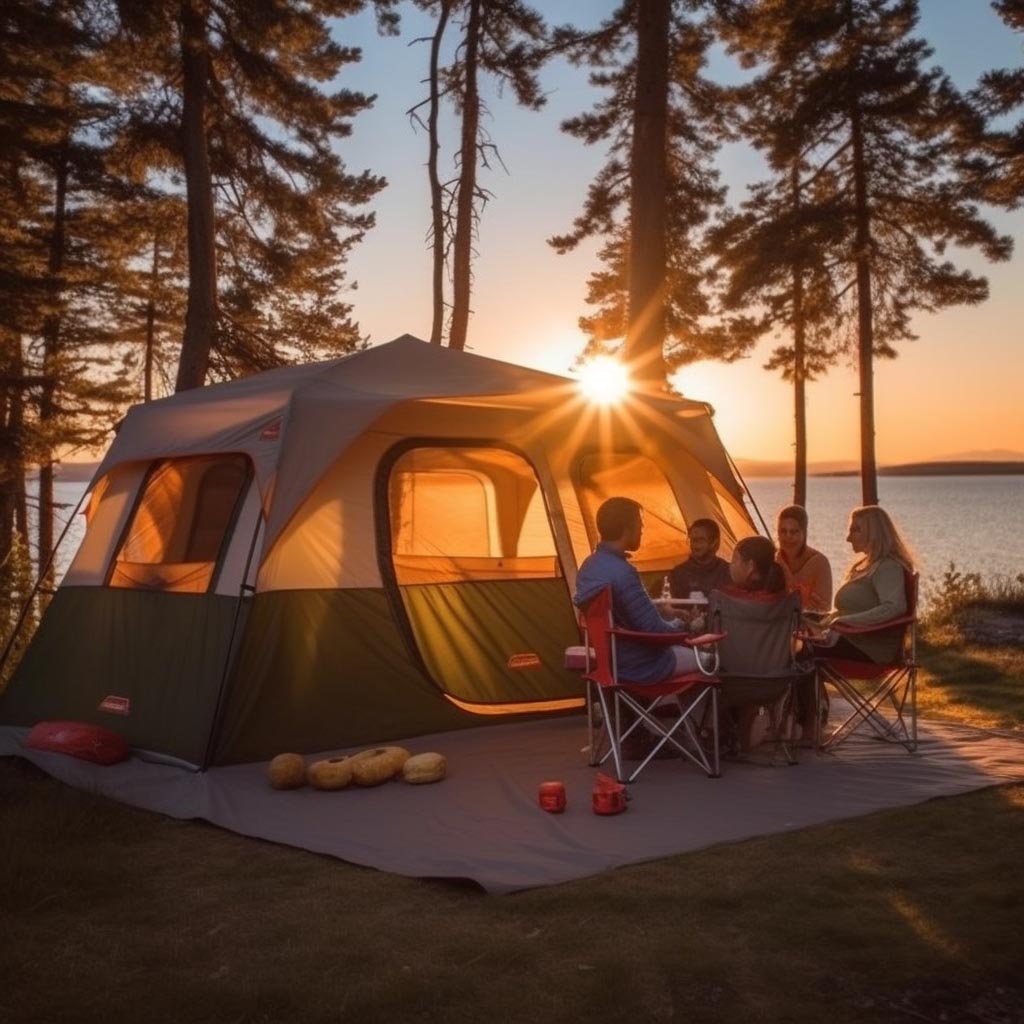
Family Tents are fun

Maintaining Your Family Tent

Cleanliness is Next to Campingness

In order to prolong the life of your family tent, it is important to keep it clean. Dirt and debris left on the tent can cause mold and mildew, which can ruin the fabric and make the tent smell bad.

To clean your family tent, start by removing any loose dirt or debris with a soft-bristle brush or broom. Then, mix a mild soap (such as dish soap) with warm water and use a sponge or cloth to gently scrub the exterior of the tent. Be sure to avoid scrubbing too hard or using any harsh chemicals that can damage the material. Rinse thoroughly with clean water and allow it to air dry completely before packing it away.

Storing Your Family Tent

Properly storing your family tent is just as important as cleaning it. Before packing it away, make sure that it is completely dry inside and out. If you pack away a damp or wet tent, you risk developing mold and mildew on the fabric while in storage.

Once dry, fold your tent loosely (not tightly) so that it doesn’t develop creases over time which could weaken certain areas of the fabric. A common mistake many people make when storing their tents is leaving them packed tightly in their stuff sacks for extended periods of time between uses.

This compresses material over time which causes “cram” marks that damage fabric fibers, reducing its lifespan drastically! To avoid this issue, store your family tents either hanging up vertically like garments in closets while making sure they are not crammed together by allowing enough space between each other where air can circulate freely around them.

Common Problems And Solutions

Even with proper maintenance techniques, sometimes things go wrong which necessitates replacing parts or entire tents altogether. Some issues include:

  • Rips or tears in the tent fabric
  • Leaks at seams or zippers
  • Bent poles

Luckily, many manufacturers offer repair kits or replacement parts for these common issues. Before heading out on your next camping trip, make sure to inspect your family tent thoroughly and address any potential problems ahead of time. If you do run into a problem while camping, don’t panic! With a little bit of creativity and resourcefulness, you can often find a temporary solution until you can make permanent repairs. Remember, taking care of your family tent will ensure that it lasts for many happy camping trips to come!

Fun Features of Family Tents

Creative ways to personalize your family tent (decorations, lighting)

If there’s one thing that can make a family camping trip even more enjoyable, it’s adding a personal touch to your tent by decorating it with creative and unique decorations. Not only does this show off your personality and style, but also makes it easier to spot your tent in the sea of others.

Some ideas for decorating your tent include adding colorful bunting or paper lanterns that are battery-operated instead of candles. You could also add photos of the family or favorite quotes on the inside walls of the tent with removable adhesive strips. Lighting is another way to make your family tent stand out from the rest.

String lights can be laid along the top edges of the tent’s interior giving it a warm and cozy vibe, while lanterns add an ambient glow for those intimate moments around a campfire. With so many options available these days, you’re sure to find lighting that fits your style and budget.

Unique features that some family tents offer (built-in screens, separate rooms)

Gone are the days where camping meant roughing it in a cramped nylon shelter with nothing but sleeping bags and a cooler full of hot dogs. Modern family tents have innovative features such as built-in screens which keep bugs out while still allowing fresh air in, keeping you comfortable throughout the night.

Separate rooms are an excellent addition for parents who need privacy or couples who want their own space away from kids playing. These work well for families whose children are at different ages as well since they allow everyone their own space without being cramped together in one room.

Personalizing your family tent is an excellent way to set yourself apart from others while camping. Plus, unique features like built-in screens and separate rooms enhance comfort levels making camping enjoyable even for the most reluctant outdoor enthusiasts.

Best Destinations for Family Camping

Camping with family is one of the most rewarding and enriching experiences that you can have, but choosing the right destination is key to a successful trip. While there are countless places in the US to camp with your family, some destinations stand out above the rest.

Some Really Fun Places to Camp With Your Family!

RankLocationWebsite
1Yellowstone National ParkVisit Website
2Acadia National ParkVisit Website
3Grand Teton National ParkVisit Website
4Yosemite National ParkVisit Website
5Glacier National ParkVisit Website
6Zion National ParkVisit Website
7Rocky Mountain National ParkVisit Website
8Great Smoky Mountains National ParkVisit Website
9Olympic National ParkVisit Website
10Sequoia and Kings Canyon National ParksVisit Website

One of my personal favorite destinations for family camping is Yellowstone National Park. This stunning park boasts an incredible variety of landscapes, from mountains and forests to geysers and hot springs. There are plenty of campsites available within the park, ranging from rustic to fully-equipped, so you can choose what works best for your family.

The abundance of activities within the park is also a huge plus – you can hike, fish, bike, or just relax in any number of gorgeous locations. Another destination that I highly recommend is Acadia National Park in Maine.

This seaside park offers breathtaking views and endless opportunities for outdoor recreation. The camping options here range from traditional campsites to cabins and RV parks, so there’s something for every type of camping enthusiast.

One thing that sets Acadia apart from other parks is its extensive network of trails – hiking here can be as easy or challenging as you want it to be. Plus, there are plenty of activities nearby such as kayaking or whale watching tours that will keep everyone entertained.

Activities and Attractions Near These Destinations

While camping itself can be a lot of fun, having nearby activities and attractions can take your family trip to the next level. If Yellowstone National Park is on your list of potential destinations, make sure you carve out some time to visit Grand Teton National Park as well – this stunning landscape has jaw-dropping views around every corner and endless opportunities for adventure.

For those planning on visiting Acadia National Park in Maine, consider making a stop at Bar Harbor – this charming town has great restaurants and shopping, as well as plenty of oceanfront activities like whale watching or kayaking. If you’re looking for a vibrant city experience to pair with your camping trip, consider visiting Asheville, North Carolina.

This eclectic city is surrounded by stunning mountain ranges and offers a plethora of cultural events and activities, not to mention some amazing dining options. No matter what destination you choose for family camping, be sure to research nearby activities and attractions to make the most of your trip.

Safety Tips for Camping with Children

Camping with children is a wonderful experience that can create lasting memories for the whole family. However, it’s important to prioritize safety when camping with little ones. Here are some precautions to take:

  • First and foremost, make sure you bring a first aid kit and know how to use it. Kids are prone to scrapes, cuts, and bruises, so be prepared for anything.
  • Also, teach your children the basics of wilderness first aid so they can help themselves or others if needed.
  • Another crucial safety tip is to be mindful of fire safety when camping with children. Keep the campfire contained in a designated fire pit and never leave the fire unattended. Teach your kids how to safely handle matches or lighters if they’re old enough, but always supervise them closely.
  • Keep an eye on your surroundings and be aware of any potential hazards in the area such as steep cliffs or poisonous plants.

By taking these precautions and being vigilant while camping with your kids, you’ll ensure everyone has a safe and enjoyable trip.

How To Keep Children Entertained While Camping

Camping can be an exciting adventure for kids, but it can also get boring quickly if there’s nothing to do. Here are some ideas for keeping your little ones entertained while camping:

  • Bring along some classic outdoor toys such as frisbees, balls, or kites that will keep them busy during downtime around camp.
  • Organize nature scavenger hunts where children must collect items from nature like pine cones or rocks in exchange for prizes.
  • Teach them new skills like fishing or map reading that they can practice while exploring the area around camp.
  • Don’t forget about storytelling! Gather around the campfire at night and spin spooky tales that will capture their imaginations (just make sure they’re age-appropriate).

By incorporating these activities into your family’s camping trip, you’ll ensure that your children have a memorable and enjoyable time in the great outdoors.

Conclusion – The Ultimate Guide to Family Tents

Throughout this article, I have covered the various aspects of family tents, including how to choose the right one, set it up, and maintain it. We discussed different types of tents and their features. We also explored some great camping destinations and safety tips for camping with children.

Final thoughts on the importance of family tents for outdoor adventures: Family tents are an essential item for outdoor enthusiasts who want to enjoy nature while having a comfortable base camp. These tents provide protection from the elements, privacy, and a sense of security when camping in remote areas.

A good quality family tent can last for many years with proper maintenance. In my opinion, there is nothing more important than spending time outdoors with your loved ones. Family tents offer an opportunity for families to bond over shared experiences in nature. Whether it’s watching a sunrise or roasting marshmallows by the campfire, these moments create memories that will last a lifetime.

So if you’re planning a family camping trip soon, make sure you invest in a good quality tent that can accommodate everyone comfortably. And don’t forget to take safety precautions seriously and respect nature by leaving no trace behind.

I hope this ultimate guide has provided you with valuable information on family tents that will help make your next camping trip even more memorable. Happy camping!


Out Of the Dark: Campsite Lighting Ideas

Discover various campsite lighting ideas, including gas lanterns, battery-operated lights, and solar power options.

12 Powerful Items for an Unforgettable Outdoor Adventure

Ignite your camping adventure with our handpicked selection of 12 powerful essentials. From game-changing gear to elevate your comfort to practical tools for seamless outdoor cooking, discover the must-haves that will transform your trip into an unforgettable experience. Whether you’re a seasoned camper or embarking on your first outdoor journey, be fully prepared to embrace nature’s beauty and create lasting memories. Explore our curated list and gear up for an extraordinary camping journey today

Best Campsite Hatchets For The Average Camper

Best Campsite Hatchets Alright, Summer is just about to wrap up and if your anything like me you might be starting to keep an eye out for those...

Discover the Magic of Leave No Trace Principles for Camping

Camping is a great way to get closer to nature, explore new places, and bond with friends and family. However, it also brings the responsibility of respecting nature and preserving it for future generations. This is where Leave No Trace principles come in – a set of guidelines designed to help campers minimize their environmental impact while enjoying the great outdoors.

Weightless: An In-Depth Look At Ultralight Tents

Experience the freedom of ultralight camping with portable and lightweight tents.

A Comprehensive Guide to the Best Backpacking Stoves

Explore different types of backpacking stoves and factors to consider when choosing the right one

Top Camping Lanterns of 2023: Ultimate Guide to Transform Your Nights Outdoors

Here are our choices for this years top Camping lanterns!   Welcome to our ultimate guide to the top camping lanterns of 2023! If you're an...

The Ultimate Guide to Selecting and Utilizing Exquisite Camping Cookware

Camping Cookware Definition and Importance of Camping Cookware Picture this: you're surrounded by the majestic beauty of nature, breathing in the...

Ultimate Comfort and Relaxation with These Top Camping Hammocks

Explore the top camping hammocks that offer unparalleled comfort, durability, and portability. Discover lightweight and versatile double hammocks for your outdoor adventures

Survival or Peril: Campsite Dogs and the Bear Conundrum

Dog and Black Bears: Mitigating Risks at the Campsite

Us at the columbia river
Campsite planning Logo

This site is operated by Docslys Design, which is a participant in the Amazon Services LLC Associates Program, an affiliate advertising program designed to earn advertising fees by linking to Amazon.com.

The Best Backpacking Tents for Outdoor Adventurers on a Budget

The Best Backpacking Tents for Outdoor Adventurers on a Budget

Discover the top 10 backpacking tents under $200 that combine affordability with quality. From the lightweight and compact Naturehike Cloud-Up 2 Tent to the spacious Coleman Sundome Tent, these tents are perfect for budget-conscious adventurers.

Affordable Backpacking Tents: Top Picks under $200 for Outdoor Adventurers

As an outdoor adventurer, getting away from the hustle and bustle of daily life is often the ultimate goal. Whether you’re looking to escape into the woods for a weekend camping trip or push yourself to summit a mountain peak, having a reliable and high-quality backpacking tent is essential. These tents are designed to be lightweight, compact, and easy to set up so that they can be carried with you on long hikes or treks into remote areas.

They offer shelter from the elements and protection from insects, keeping you comfortable and safe while you explore the great outdoors. But finding the right backpacking tent can be a daunting task.

Affordable Options Under $200

When it comes to selecting a backpacking tent, there are several factors to consider: weight, durability, size, ease of setup, and cost. While it might be tempting to go for the cheapest option available, skimping on quality can end up costing you more in the long run if your tent fails when you need it most.

Fortunately, there are plenty of budget-friendly options out there that won’t break the bank without sacrificing quality or features. In this article, we’ll focus specifically on affordable backpacking tents that cost less than $200.

But don’t let their low price tag fool you – these tents still offer excellent value for money and are sure to serve you well on your next adventure. So whether you’re planning an overnight trek through rugged terrain or a multi-day camping trip with friends, read on to discover our top picks for the best backpacking tents under $200.

Top 10 Backpacking Tents Under $200

Tent NameFeatures
Naturehike Cloud-Up 2 TentLightweight and compact design, easy setup, waterproof rainfly
ALPS Mountaineering Lynx 1-Person TentSturdy aluminum poles, durable polyester rainfly, mesh walls for ventilation
Coleman Sundome TentSpacious dome-style tent, WeatherTec system for waterproofing, easy setup
Kelty Salida Camping and Backpacking TentFreestanding design, easy-to-pitch clip system, vestibule for gear storage
Bessport Camping TentGeodesic dome structure, high-quality materials, well-ventilated design
Marmot Crane Creek Backpacking and Camping TentMesh panels for ventilation, durable polyester rainfly, roomy interior
Teton Sports Mountain Ultra TentEasy setup, bathtub-style floor construction, reliable waterproof protection
Snugpak Journey Solo Tent210T polyester ripstop fabric, waterproof PU coating, built-in mosquito net
Eureka! Solitaire AL One-Person, Three-Season Backpacking TentLightweight, full-coverage rainfly, durable aluminum frame
Weanas Professional Backpacking TentMesh windows for ventilation, aluminum alloy poles and stakes, sturdy and compact design

Criteria for Selection

The Importance of Choosing the Right Backpacking Tent

One of the most important elements of any backpacking adventure is selecting the right gear. This is especially true when it comes to selecting a tent. A good backpacking tent needs to be lightweight, durable, and easy to set up.

It also needs to be able to handle whatever weather conditions you might encounter during your trip. However, with so many different options on the market, choosing the right tent can be overwhelming.

Factors Considered in Selecting Top 10 Backpacking Tents Under $200

When selecting our top 10 backpacking tents under $100, we considered several key factors. First and foremost, we looked at durability. No one wants a tent that falls apart after just a few uses. We also considered weight since carrying a heavy tent on your back for miles can quickly become exhausting.

Size was another important factor as you want enough space for yourself and your gear without having too much extra weight or bulk in your pack. Ease of setup was also considered as setting up camp can be tiring after a day of hiking. We wanted tents that could be easily set up without requiring an engineering degree or an army of helpers. Value for money was taken into account as we wanted to present affordable options without sacrificing quality or features.

Why These Factors Are Crucial

Each factor plays an important role in making sure that you have a successful and enjoyable backpacking experience. A durable tent will keep you safe and protected throughout your trip no matter what challenges nature throws your way. Choosing a lightweight option with ease of setup means that you won’t get tired before even starting the hike! Furthermore, having ample space in your backpacking tent will mean that you’re able to take all essential belongings with you wherever you go on your journey. Finding good value for money is key to making sure that you don’t break the bank on equipment before or during your trip. All of these factors are essential when choosing the best backpacking tent under $100, and we’ve made sure that each tent on our list meets these basic requirements.

Backpacking Tents for Outdoor Adventurers<br />

Top 10 Backpacking Tents Under $200

Naturehike Cloud-Up 2 Tent

The Naturehike Cloud-Up 2 tent is a lightweight and compact option that is perfect for backpackers on a budget. Weighing in at just over three pounds, this two-person tent is ideal for shorter backpacking trips where space and weight are at a premium. The tent’s unique design features a single pole that can be easily set up in just minutes, making it a great option for hikers who want to spend more time exploring the outdoors.

ALPS Mountaineering Lynx 1-Person Tent

The ALPS Mountaineering Lynx 1-person tent is an excellent choice for those who are looking for an affordable but high-quality option. With its sturdy aluminum poles and durable polyester rainfly, this lightweight tent offers excellent protection from the elements while still being easy to set up and take down. The Lynx also features two vestibules that provide extra storage space for gear.

Coleman Sundome Tent

For those who want a budget-friendly tent without sacrificing comfort or durability, the Coleman Sundome tent is an excellent choice. This spacious four-person dome-style tent features Coleman’s patented WeatherTec system, which includes welded floors and inverted seams to keep you dry in even the wettest conditions. Its easy-to-set-up design makes it perfect for families or groups of friends looking to spend some time in nature.

Kelty Salida Camping and Backpacking Tent

The Kelty Salida camping and backpacking tent combines affordability with quality construction to provide hikers with an excellent value-for-money option. With its freestanding design and easy-to-pitch clip system, this lightweight two-person tent can be set up quickly so you can start your adventure. The Salida also features a spacious vestibule for extra gear storage, making it perfect for longer backpacking trips.

Bessport Camping Tent

The Bessport camping tent is an affordable option that doesn’t skimp on features. This two-person tent is made with high-quality materials that can withstand harsh weather conditions, and its freestanding design makes it easy to pitch. Additionally, the tent’s well-ventilated design ensures that you’ll stay comfortable no matter the weather outside.

Marmot Crane Creek Backpacking and Camping Tent

The Marmot Crane Creek backpacking and camping tent is a lightweight option that offers exceptional protection from the elements. Its durable polyester rainfly and sturdy aluminum poles provide excellent support even in high wind conditions, while its roomy interior offers plenty of space for two people to sleep comfortably.

Teton Sports Mountain Ultra Tent

The Teton Sports Mountain Ultra Tent is a budget-friendly option that doesn’t compromise on quality or performance. It has a spacious interior that comfortably fits two people, and its durable rainfly provides excellent protection from the elements. The tent’s lightweight design makes it perfect for backpackers looking to cut down on weight without sacrificing comfort or protection.

Snugpak Journey Solo Tent

The Snugpak Journey Solo tent is an excellent option for solo hikers who are looking to save money without compromising on quality. This easy-to-pitch bivvy-style tent provides exceptional protection from the elements thanks to its durable rainfly and waterproof groundsheet.

Eureka! Solitaire AL One-Person, Three-Season Backpacking Tent

For solo hikers looking for an affordable yet high-quality tent, the Eureka! Solitaire AL one-person three-season backpacking tent is an excellent choice. This lightweight option features a full-coverage rainfly and a durable aluminum frame that provides excellent protection from the elements.

Weanas Professional Backpacking Tent

The Weanas Professional backpacking tent is an affordable option that doesn’t compromise on quality. This two-person tent is made with high-quality materials and features a sturdy aluminum frame that can withstand harsh weather conditions. Its easy-to-pitch design makes it perfect for hikers who want to spend more time exploring and less time setting up camp.

Pros and Cons of Each Tent

Naturehike Cloud-Up 2 Tent

The Naturehike Cloud-Up 2 Tent is a great choice for novice backpackers. It features an easy-to-assemble design with just one pole, making it lightweight and easy to carry. It has a waterproof rainfly made of 20D nylon that can withstand harsh weather conditions and keep you dry. With ample headroom, it is spacious for two people to fit comfortably. However, the tent material is not as durable as others on this list.

ALPS Mountaineering Lynx 1-Person Tent

For solo backpackers, the ALPS Mountaineering Lynx 1-Person Tent is a great option. It has two aluminum poles that make it sturdy during windy nights. The tent’s walls are made with mesh fabric which provides excellent ventilation in hot weather while keeping insects out at the same time. The rainfly is made of polyester which makes it water-resistant but may not be suitable for heavy downpours. Additionally, the size of this tent may be too small for some people.

Coleman Sundome Tent

The Coleman Sundome Tent offers an excellent value-for-money option given its durability and features. The tent’s dome shape makes it easy to set up with fiberglass poles that resist strong winds well enough. With large windows and ground vents, it provides adequate ventilation even in hot climates while its patented WeatherTec system ensures no leakage when rain comes pouring down externally or internally through condensation inside the tent itself.

Kelty Salida Camping and Backpacking Tent

Kelty Salida Camping and Backpacking Tent can easily accommodate two people along with their gear in its comfortable interior space offering maximum convenience for backpackers who want something lightweight yet spacious enough for them to move around freely without feeling cramped. It is made with durable materials such as 68D polyester walls and rainfly, giving it enough protection from harsh weather conditions. However, it may not be suitable for taller people due to its relatively low height.

Bessport Camping Tent

The Bessport Camping Tent has a unique design with a geodesic dome structure that is quite robust in windy environments. Its rainfly is made of 68D polyester, keeping the interior dry even during torrential downpours. With two doors and vestibules for each person, it provides ample space and privacy for two backpackers to live together in harmony. Unfortunately, the tent’s zippers may not be very durable.

Marmot Crane Creek Backpacking and Camping Tent

The Marmot Crane Creek Backpacking and Camping Tent provide excellent ventilation through mesh panels located on the top of the tent’s body which keeps air flowing throughout the night making it comfortable to sleep in hot weather conditions along with protection from bugs or insects creeping in. Its walls are made of 68D polyester that can withstand adverse outdoor elements such as rain and wind while remaining lightweight enough to carry around on your backpacking trip. The tent was designed for two people but might become too cozy if you have lots of gear.

Teton Sports Mountain Ultra Tent

The Teton Sports Mountain Ultra Tent boasts an easy-to-set-up design that allows you to assemble everything within just a few minutes regardless of your camping experience level making it ideal for first-time campers or those who don’t want complicated setups during camping trips. With its bathtub-style floor construction, this tent provides reliable waterproof protection against any water seeping inside your tent during rainy seasons or condensation periods throughout humid nights ensuring maximum comfort even when mother nature isn’t cooperating.

Snugpak Journey Solo Tent

The Snugpak Journey Solo Tent provides excellent protection from all outdoor elements with its 210T polyester ripstop fabric which can withstand harsh weather conditions. Its flysheet is made of waterproof PU coating ensuring that no water penetrates through the tent’s surface keeping you dry and comfortable throughout your backpacking adventure. The tent also has a built-in mosquito net which protects you from annoying bugs and insects. However, it may be too compact for taller people.

Eureka! Solitaire AL One-Person, Three-Season Backpacking Tent

For solo hikers looking for an affordable yet high-quality tent, the Eureka! Solitaire AL One-Person, Three-Season Backpacking Tent is an excellent choice. This lightweight option features a full-coverage rainfly and a durable aluminum frame that provides excellent protection from the elements.

Weanas Professional Backpacking Tent

The Weanas Professional Backpacking Tent offers ample ventilation through mesh windows located on each side of its body allowing for optimum airflow during hot weather climates while providing complete privacy to its users. With its aluminum alloy poles and stakes, this tent is quite sturdy and can withstand high winds without collapsing or swaying too much making it ideal for those seeking maximum protection in dire weather situations. However, it may be too small for taller individuals.

And Finally

After reviewing the top 10 best backpacking tents under $200, there are many options to choose from depending on your needs and preferences as a backpacker. Each tent offers unique features and benefits along with some drawbacks that should be taken into consideration before making a final decision.

It ultimately depends on what you prioritize most in a backpacking tent, whether it be the weight, durability, ease of assembly, or waterproof capabilities. Rest assured that with any of the tents listed above, you won’t have to break the bank to have a great backpacking experience.


Pitch Perfect: Your Ultimate Guide to Setting Up a Tent

Learn how to set up a tent like a pro with our step-by-step guide. Find the perfect spot, pick the right tent & master the art of pitching for ultimate camping success.

A Comprehensive Guide to Choosing Your Ultimate Camping Knife

Camping can be an exhilarating and fulfilling experience. But to have a successful trip, you need the right tools. A quality camping knife is essential. Learn how to choose the perfect one!

Paradise on the Beach: Beachfront Tent Camping

Beachfront tent camping combines the beauty of nature with the excitement of beach activities. Discover the appeal of waking up to an unobstructed view of paradise, immersing yourself in the natural environment, and disconnecting from technology.

Cozy Secrets Revealed: Unraveling the Magic of Mummy Sleeping Bags

Explore the world of mummy sleeping bags and uncover their cozy secrets. Learn about insulation types, temperature ratings, and more to find the perfect sleeping bag for your outdoor adventures.

High Altitude Camping With Kids

High altitude camping can be fun if you are geared up for it right. Now couple that with kids at an elevation of 3000-5000 ft. And high altitude...

Survival or Peril: Campsite Dogs and the Bear Conundrum

Dog and Black Bears: Mitigating Risks at the Campsite

Discover the Best Camping Coolers for Your Adventure

Chill Out: Discovering the Best Camping Coolers for Your Next Adventure Let's face it, there's nothing worse than warm beer or spoiled food on a...

Ultimate Outdoor Essentials: Gear for Epic Camping Adventures!

Prepare for your camping trip with these essential accessories that ensure a safe and enjoyable outdoor experience.

Tent or Hammock? What’s the Difference?

Tent or Hammock? What's the Difference? When you go on a camping trip what is the form of shelter you prefer? I have been a tent man my whole life,...

Out Of the Dark: Campsite Lighting Ideas

Discover various campsite lighting ideas, including gas lanterns, battery-operated lights, and solar power options.

Us at the columbia river
Campsite planning Logo

This site is operated by Docslys Design, which is a participant in the Amazon Services LLC Associates Program, an affiliate advertising program designed to earn advertising fees by linking to Amazon.com.

How to Make A Campfire: A Beginners Guide to Flame!

How to Make A Campfire: A Beginners Guide to Flame!

Why is a Campfire Important

A lot of people see the time spent around the campfire as the soul of the camp. Perhaps they’re exaggerating a bit, but we understand the importance of the campfire.

Camping isn’t complete without a campfire. Aside from the warmth generated by the dancing flame, lots of camping activities are only made available by having a fire.

  • Cooking Food (Smores)
  • Boiling water (Coffee)
  • Drying Wet Clothing and Gear (Rain)
  • Lighting Camp (Darkness)
  • Raising spirits (nerves)

Not only does it give you a physical attribute as heating there is a mental side as well. It helps make you feel safe and secure. At least In my mind.

keeping the critters away at night is a significant effect fire has as well. I don’t know of many animals that will come toward a camp that is lit by a campfire. (honestly, I don’t know any critters, just an example…;)

Starting  A Fire

Knowing how to start a campfire is a skill you should know before going camping. In this piece, we will explain how to start a campfire and the different styles to accomplish this.

Before we go into the ABC’s of how to start a campfire, a little insight on the chemistry of fire itself will help your case a little.

Speaking of ABC’s a fire needs three core elements; Oxygen, fuel source, and heat. Once these three elements combine in the right order, They create a chemical reaction known as Fire!

Campsite planning

The Fire Triangle

They call it The Fire Triangle, it is the basic chemistry behind a flame.

  • Oxygen (O2)
  • Fuel (Wood – Fuel)
  • Heat source (Ignition – Spark)

The fuel source could range from papers, oils, to chunks of dry leaves. But for a campfire, dry wood is the standard used fuel.

Campfire Location

Depending on the location of the campsite you might have to improvise accordingly. In the warmer times of the year, just about everything can serve as fuel.

Of course, we don’t recreate only in those times and moisture may cause issues when using natural resources in the wetter and colder months.

Natural Resources

If you are camping in the forest and it has been dry, you will most likely not have an issue finding fuel for the campfire. Small twigs to dead trees will be abundant most of the time.

( Check your local burn bans and code at your local forestry dept.)

If you are camping next to water sources or up in the mountains with heavy snowfall the resources might be more on the damp side and finding burnable fuel can become a very stressful situation if your campfire experience is low.

MORE | Tents or Hammocks?

Other Essential Tips

Be prepared the best you can. Bring waterproof matches; a lighter, a striker, a magnesium strip, anything you can bring along that can help your situation if you get yourself in a bit of trouble will go along ways.

To create a campfire, you need to have the necessary resources. Take a tour of your surroundings and see what you can find.

Wood will mostly be available, but its condition will depend on the weather situation around the area.

Getting a campfire started doesn’t just involve stacking some limbs or fallen trees onto a fire ring and lighting it on fire.

This style can work, don’t get me wrong, to sustain a fire it needs to be nurtured and done in a way you will not run out of fuel to fast, and it won’t go out due to the elements.

Successful campfire building in the wilderness requires some fundamentals you must have to start one. We will take a look at them now!

Fuel Gathering

Situations

The speed and effectiveness of starting your fire will largely depend on your level of preparedness and ability to gather fuel. This will depend of course on your circumstances.

If you become lost and you are not prepared for this, the whole situation becomes dire, and the need for fire becomes almost an emergency, in some instances.

Finding fuel in this type of situation is stressful and can be dangerous. If its dark out and you can’t see anything finding just the minimal amount of resources to get the fire going should be a priority. (Try and gather plenty of fuel to burn long enough to be able to get more though.)

Once a fire is started, and you have light then you can find more resources easier. Remember speed will be a factor. Fire burns quickly, and you need to keep it fueled.

Although if your camping with friends and family or on a hunting trip, the situation entirely changes and is more laid back and your fire starting necessity may not be as urgent.

Many time fire fuel is brought with us in these instances and fire starting becomes a fun activity we can share with friends and family. (One of my favorite things is to watch my children practice these skills)

Materials

Wood Wood is an essential element is necessary for all campfires. It can be small scrapes, strips, shavings or logs. Regardless of their form or shape.

It would be best if you seek out the driest logs and pieces of wood. This will save you from the stress of having to expend more energy and resources trying to get through the wet exterior.

(It is possible to burn damp wood it is just incredibly time-consuming and challenging)

There are different names used for referring to wood resources based on their size or their sources, and for your campfire, you sure will need most (if not all) of them.

Tinder – material that will take the initial ignition and become the start of the fire. Usually a small dry substance such as dry tree needles, moss, or wood shavings, etc.. (Burn approximately 10-30 seconds)

Kindling – small twigs and branches generally under 2 inches in diameter and about 8-12 inches long. This is the “get the fire going” material. (burn approximately 1-4 mins each.)

Limbs and Branches –  Larger diameter wood that has fallen from trees to the ground and can be cut up into 12-20 inch lengths.  (burn approximately 20-30 mins each.)

Logs – fallen tree trunks that can be bucked up into long-lasting firewood. Usually, 4-24 inches in diameter does take longer to process but also burns much longer. (burn approximately 30min -2 hours each Depending on size.

Warning – Please respect our wilderness areas and unless it is an emergency do not cut down, limb, or break wood off living trees. The wood sucks to burn anyway and its devastating to the environments. Just a thought.

MORE | Hatchets

A heat/fire source Having a good ignition source will increase your fire making abilities by a lot. Don’t rely on one type of source either. Make sure to have a few options in your gear.

Waterproof matches Can be purchased for your camping gear and should be in everyone’s kit for emergencies. Depending on your source they can work or they might not.

Butane Lighters (Bic) These also can be put into your camping gear to help with fire starting. This is the way most people will be able to get a fire started quickly and easily. The downfall is that one they get wet they are garbage.

Strikers (Ferro of, Magnesium strip, fire steel), All of these, are for emergency uses and can work when wet. (Most of the time).

Friction Fire (bow drill, Hand drill, etc.) These are more of a primitive and last form of survival technique to get a fire going. Unless, you know how these styles work and have used them, achieving fire this way is extremely difficult.

SETUP

After securing all the materials that you will need for your campfire, the next logical thing to do is to set up the fire.

You have your wood and other fuel sources; you have your ignition, now is the time to put the materials together and get the fire you need to be started.

However, to have a good flame, you must take the time to prepare your campfire site. This involves taking some necessary precautionary actions and clearing the area of materials that could prevent the setup of a good campfire.

Clearing and setting Is there an existing fire ring (a spot where previous fires have been made)? Go on and clear away the cold ash and charcoal.

Doing this will present you with enough room to arrange your wood and fire materials for the new burn. You may leave the old ashes at the edge of the ring or do away with them altogether. Depending on how cold and damp they are they could affect the new fire.

If there is no existing fire ring, you will need to clear out a spot for your campfire – this would mean that you will have to remove dead grass, vegetation around your chosen place.

Using your shovel, lightly scrape off the soil from the fire ring, and keep it nearby in case of an emergency.  You are free to use the freshly removed earth as a border fence for your fire ring, or you may choose to use rocks (recommended).

I always try to use rocks, and if necessary use the earth that’s been dug up to fill in gaps.

(Be aware of your surrounding don’t be that person that starts a wildfire that burns people out of their home)

Burn it up!

Structure

At this point, you have cleared your fire ring, and you are ready to start setting up your kindling and wood for the fires. Some fire types are best suited for different occasions.

Before we go on to discuss them, take your tinder as we talked about above or some light wood, paper material, cardboard and place them at the center of the fire ring, it shouldn’t be more than a foot in diameter.

Now to the fire! Most people do not realize that there are several forms of campfires, and each has a specific purpose that they serve.

The following are some campfire types you can set up and their designated functions.

Log Cabin Fire – This is a fire that is intended to last long. It is great for long nights in the winter.

Lean-to-Fire – This is a fire type that is great for cooking. It is not meant to last long. Use small pieces of kindling and tinder to start the flames and then add more wood as the fire grows.

Teepee Fire – The Teepee fire is great for cooking. All you need to do is to arrange the sticks in a teepee above the position of the tinder.

Cross Fire – Also suitable for fires that are meant to last for a while, the Cross Fire differs in wood arrangement slightly as the wood pieces are placed in a criss-cross manner.

Ignition

On to the final part of it all and that is lighting the fire.

Keep kids and pets away by a safe distance before you set fire to the tinder. Light it up from several edges. This ensures the tinder lights up quickly.

Never use gasoline regardless of the circumstances you might find yourself. Gas is extremely volatile, and the situation could escalate rather soon especially when in the woods.

All Done?

When you’re through, and the fun is over, ensure that you thoroughly and exhaustively put out the fire.

Do these strategies to avoid problems. Gently sprinkle water onto the flame. As you continue doing this, watch the embers and stir them gently while pouring more water. Continue until you can no longer hear the hissing sound of the embers.

That’s it; you’re good to go.

Sleep Tight: The Best Sleeping Bags for Camping

the best sleeping bags for camping in this comprehensive guide. From cold weather to warm weather, family trips to specialized situations, find the perfect sleeping bag for your camping adventures. Learn about temperature ratings, insulation types, shapes, sizes, and other important features to ensure a comfortable night’s sleep under the stars.

Top Ten Of The Best Family Tents To Stay Cozy

Discover the top 10 family tents, offering comfort, durability, and spaciousness. Create memorable outdoor adventures with these versatile camping companions.

The Ultimate Guide to Selecting and Utilizing Exquisite Camping Cookware

Camping Cookware Definition and Importance of Camping Cookware Picture this: you're surrounded by the majestic beauty of nature, breathing in the...

A Comprehensive Guide to the Best Backpacking Stoves

Explore different types of backpacking stoves and factors to consider when choosing the right one

How To Camp While Snowmobiling: A Wonderful Ride

....If you ever get the chance to take a trip and go camping while snowmobiling up on the side of a mountain, I suggest you do it. Few things in...

A Comprehensive Guide to Choosing Your Ultimate Camping Knife

Camping can be an exhilarating and fulfilling experience. But to have a successful trip, you need the right tools. A quality camping knife is essential. Learn how to choose the perfect one!

From Novice to Pro: Expert Tips for Picking the Perfect Campsite

Camping can be one of the best ways to escape daily life and enjoy nature. Learn how to choose the perfect campsite based on location, amenities, wildlife awareness, and more.

Weightless: An In-Depth Look At Ultralight Tents

Experience the freedom of ultralight camping with portable and lightweight tents.

Secrets of Building a Campfire Revealed: Impress Your Friends!

Master the Flames: Learn how to build a safe and efficient campfire like a pro with our detailed guide. Gather materials, build the pit, and start your fire! The crackling sound of the flames, the warmth that envelops your body, and the mesmerizing dance of light create a magical atmosphere that captivates us all. A campfire is where we gather with friends and family to share stories, sing songs, and roast marshmallows. It’s a place where we relax, unwind, and connect with nature.

Expert Tips for Delicious and Safe Camping Cuisine

Camping is a great way to unplug and connect with nature. Learn expert tips for delicious and safe camping cuisine. Plan your meals, cook over a campfire, and stay hydrated. Also, practice Leave No Trace principles to minimize your impact on the environment.

Us at the columbia river
Campsite planning Logo

This site is operated by Docslys Design, which is a participant in the Amazon Services LLC Associates Program, an affiliate advertising program designed to earn advertising fees by linking to Amazon.com.

Tent or Hammock? What’s the Difference?

Tent or Hammock? What’s the Difference?

Tent or Hammock? What’s the Difference?

When you go on a camping trip what is the form of shelter you prefer? I have been a tent man my whole life, and I don’t expect that to change. A buddy of mine swears up and down that a hammock is the way to go. How about we take a good look at the two and see which is better or worse for you!

Tents are far from ideal. There are lots of things to consider with the use of the tent. From finding the perfect campsite to the fear of the unknown, the list is endless. But we have warmed up to it.

Then there’s the hammock. This tent – the alternative is hinged on an arboreal lifestyle. Yes, you read that right. You’d have to take a nap on a synthesized material supported by trees. As crazy as that sounds, many are making the switch without looking back.

What makes these two camping accessories different? Let’s find out.

The Differences in Setup

The most conspicuous difference between the use of the tent and hammock is tied to their setup.

With a tent, it’s all about searching for the right surface – no flooding, possible animal invasion nor awkward terrain. It has to be perfect or at the very least, close enough.

The setup of a hammock couldn’t be any different. This camping approach is heavily dependent on trees.

To camp in a hammock, you’d have to find the right trees. Besides proximity, these woody plants have to be strong enough to support your weight.

No exceptions! This shouldn’t come as a surprise since the hammock material is tied to both trees.

With a hammock, the action on the ground isn’t much of a concern to you – unless of course, it affects the supporting trees.

More | Camping in the Desert

The Weight Factor

Tents are usually heavier than hammocks. They are built to withstand the elements while camping. It’s like taking your home along in a backpack. With structural components consisting of cotton, nylon, and polyester, the tent is bound to be heavy especially when it rains.

While this will add to the burden of transportation, it keeps you safe from the weather.

With the hammock, things take a different turn. Weight isn’t much of an issue with this camping accessory.

Most hammocks are made from nylon which improves their tensile strength. The only issue is you’re at the mercy of the weather.

Innovation appears to have taken the outdoor market by storm offering products which can keep the elements at bay and providing the warmth you need.

However, these accessories could add to the weight of your backpack.

Size

One area where the tent seemingly triumphs over the hammock is size. Tents come in varying sizes. Depending on its dimensions, a tent can hold as many as four persons comfortably.

While weight might be an issue, there’s that closeness a tent breeds especially among family members.

Hammock users are not necessarily loners, but this camping accessory is about getting the privacy you need. Hanging out alone on support anchored by trees doesn’t exactly engender togetherness.

Yes, camping hammocks are available in various sizes, but they can support just one person comfortably – lovers might differ in this regard.

Time Constraint

Camping might be that place where time seems to stop. Being surrounded by nature has a way of making time irrelevant.

Even so, there are occasions when you have to set up or dismantle your tent/hammock for different reasons such as personal issues or weather conditions.

This is when you’d observe some small differences. For a tent, you could spend a few hours putting it together or dismantling it.

This will also depend on the size of the tent. Bigger tents will take more time especially if you are handling this alone.

Unlike tents, hammocks are easier to set up and dismantle. All you have to do is tie or untie the straps. This should only take you some minutes to complete.

However, the use of accessories such as the tarps and sleeping pad could add to the time spent.

MORE | How to Make a Campfire

The Change factor

The condition of your preferred campsite can change within hours of making that choice. You could sleep under cover of a tent and wake-up in a waterlogged space. Often, there’s the need to change tent positions due to the unforeseen situations. If it’s a rather large tent, then there’s a problem.

With a hammock, there’s a lower chance of surprises springing up. Having the straps of a hammock tied to the stem of trees wouldn’t put you in harm’s way if you did your homework.

No, snakes wouldn’t lunge down on you from above – real life isn’t the same as the movies. In fact, the odds of that happening are higher in a tent since more snakes are adapted to a land-dwelling habitat than an arboreal one.

Adaptability

Who wants more from their tent? Everyone. We can’t just carry around a bulky tent and get only a roof above our head. Sadly, that’s the way it is.

Innovation might be making inroads into the outdoor niche but the flexibility of the tents seems to have been missed.

The modern-day tent isn’t as adaptable as it should be. Aside from providing some sort of protection against the elements, its functions are greatly limited.

The adaptability of the tent fizzles out when compared to the hammock. The latter has a wide range of uses. Besides acting as a resting place, it’s the perfect spot for grooming your reading culture.

Many regard the hammock as an epitome of improvisation, and it’s not difficult to understand why.

The Impact of Water

The undoing of every tent is the presence of water on the surface of a campsite or the closeness of a water source. This reduces the number of potential sites for the location of your tent.

Regardless of how alluring an area might be, water can bring all that to naught. Also, you can’t enjoy the view of water bodies from a resting place.

Water isn’t a problem when resting on the hammock. From such an arboreal position, chances are you’d be unaware of the emergence of water onto the land below.

Also, you can enjoy the beauty of water bodies without fear of the condition on the ground around.

Comfort

This is one of the strengths of the tent. With its structural build, the tent provides some semblance of warmth.

Spending a cold night in a tent might not be exactly splendid, but it supersedes whatever a hammock has to offer in this regard. The absence of several openings in the tent reduces the impact of the elements on a cold rainy night!

The hammock and warmth are seen as oil and water – they don’t mix. With the level of exposure observed in the hammock, it’s difficult to argue with that.

However, innovative products like the underquilt, and sleeping pad have brought some relief to worthwhile camping gear.

Similarities Shared by Tent and Hammocks

The similarities common to both the tent and hammock could be based on their composition and function.

From a functional perspective, they provide a resting place for you when camping.

As regards the structural constituents, both tents and hammocks share the same base materials. Nylon, polyester, and cotton are some of the materials used.

Another similarity between the tent and the hammock is the level of customization possible with both camping gears.

These accessories can transform your desired camping gear into a warm safe house.

Final Thoughts

Tents and hammocks have all the attributes required to make camping less hazardous. But the hammock has shown signs of offering much more than the tent.

Accessories can erase Even its current flaws. While the tent is the pinnacle of our camping days both present and past, the hammock has the future in its sights.

Related Articles

The Unraveling of the Canine-Bear Connection: Do Dogs Attract Bears?

The Unraveling of the Canine-Bear Connection: Do Dogs Attract Bears?

The mesmerizing power that dogs possess over bears lies in their scent - a tantalizing bouquet that seems to enchant even the most stoic of bears. It's as if dogs emit an irresistible aroma that beckons these magnificent creatures to come closer, to explore, and...

Relax in Style: The Best Camping Chairs

Relax in Style: The Best Camping Chairs

Discover the top camping chairs for ultimate relaxation and comfort during your outdoor adventures. Find durable, portable, and comfortable camping chairs that suit your needs. Explore our expert recommendations and make the most of your camping experience

Camping In The Rain Guide

Camping In The Rain Guide

Camping in the Rain

Your going camping in the rain huh? Umm…wait! Is that something you are really going to do? On purpose? Hmm, are you sure? OK. I guess we better get to informing you about the ins and outs of this type of camping. Follow along as we run down our list of Camping in the Rain Guide.

Camping when it’s raining isn’t super ideal of course. That would hinder the amount of time we can spend outside. We would all rather it be warm and sunny. This guide will set you up for an ideal trip rain or shine. But if it does rain, you will be ready. We will look at setting up camp and tent locations, items to bring in your gear to stay dry and warm, and other tips and techniques to make you forget that the heavens have poured out all along the forest floor.

Watch the video below!

Tent and Campsite Location

When looking to set up camp, try to stay up and away from water. Lakes, rivers, streams, and oceans all rise very quickly with big rainfall and if you are near bodies of water there is the possibility of getting washed out during the night.

Do not set up camp right in the middle of a valley or a dried up stream or river bed especially in desert areas because these formations are hotspots for flash floods and can be very deadly. Instead, look for elevated areas at least a hundred feet from water areas. I like to try and face my tent toward the sunrise if possible. It gives you a little bit of resolution to get up and face the day after a cold, wet night. If you can find an area that has trees and is elevated, even better.

Try to set your tent in between a few good sturdy trees so you can tie up cordage to hang some tarp overtop of your tent if needed. However, you don’t want to be in the direct path of a falling branch in the middle of the night either. So be aware and if you can avoid being directly under large branches, maybe think about it. Check out the waterproof tents on Amazon here. /p>

Setup A Dry Area

Tarps and Paracord

Tarps are a camper’s best friend even in dry weather. I have always used a large 20 x 20 tarp doubled up under our family tent. Not only does it help with padding, but it keeps sticks and sharp rocks I have missed from penetrating the base of our tent. So when it comes to helping you stay dry, they are a mandatory accessory in my mind.

If you come prepared with a few tarps and some cordage, you will be so much happier. Coming from experience, being out in the rain in a dry tent at night only to wake up in a completely soaked tent kind of sucks, to be honest.

If you need paracord I picked up a 500ft spool here but they have many new colors now and I think you can buy smaller amounts. And tarps you can get at your local harbor freight or Maynards if you dont want to wait for amazon delivery. More| Campsite Essentials

Dried in Outdoor Space

Once you have reached your campsite destination and have picked your tent setup areas, the next area of business is comfortability in the camp. You want to create an outdoor living space for cooking and working the fire along with any other activities you will want to enjoy while having it drizzle down on you.

The size of your camping party will determine how large of an area you will need. If you have the whole family and some friends, this could be a pretty big area and need some time to set up. On the other hand, if you are soloing out in the woods, a small 10-foot area will do just fine.

Tarps come in some good kits these days.

Start by stringing up a couple of overhead tarps by hanging them from a couple of trees across from each other. Making sure they are angled to a drainage area that is lower than the area you are trying to keep dry. Done wrong and the water will drain off and hit the high ground and then just run right through the camp. Not good!

After the tarps are in place and all are draining correctly then you can start on the mingling area. A place to hang out drink some warm beverages, eat some dinner, play a game, or just relax. Since you are already dry overhead, you might want to think about the ground and staking down a couple of tarps that will let the water stay beneath them.

Then set up your tables chairs and anything else you brought along. Now if you are by yourself or a couple, this is going to be way less intensive, but the exercises are the same on a smaller level.

Tent Setup

(First and foremost check that you have a waterproof, good working tent with rainfly. If your gear is weak and broken, your struggle will be rough.)

As I said before, I have always laid a tarp under my tent for protection. I still do that when it rains even though some people say that it is not needed. Whatever, I like it, and I will keep doing it.

This is your decision to set up as you seem it necessary. Although I do set a tarp under my tent, I also lay one down on the inside floor of my tent. This will help with any pooling or seepage from the ground and the sides of the tent.

What happens is the water that does make it into the tent will follow gravity and end up under the tarp along the floor, allowing my sleeping bags, gear, and myself to stay dry on top of the tarp. More | Camping with a 2-year-old

Trench

The final prep for keeping the rain out from my tent is light trenching if I am going to expect a lot of moisture. What I do is grab my campsite hatchet and use the backside to carve in some trenches on the high side of my tent. Diverting any water that may try to come under my tent.

Usually, I have been able to get away with 4-6 inches deep and maybe 3 inches wide. Of course, this will vary due to the area you are camping. It rained more than the trenches could handle a few times and honestly, the tarps kept me dry enough.

Tarps are somewhat bulky and can be a pain to hike with. Pick and choose your gear accordingly.

Staying Dry Away From Shelter

Best way to stay dry while camping is not to get wet, right? Well, if you stay in camp and do not venture out at all that might be an ok scenario. Most people who do go out and camp tend to venture and like to go and explore the wonderful outdoors. Doing this can and eventually will leave you out away from camp without the proper gear to stay dry.

Having the proper protective outerwear or shell layers is going to make the difference between getting soaked and the situation becoming dangerous to getting from “point A” to “point B” and enjoying every minute of it. Great set of outer shells! With such a vast selection of weather gear, someone might get overwhelmed. There are types for the extreme cold to desert heat rain gear.

Know the area you will be going and bring the set that is suitable for the condition. If you bring the wrong one you could overheat and become dehydrated or get so cold and wet that you get hypothermia.

It is very important to pack the right raingear set. Gore-tex or E-vent are very breathable and have a waterproof membrane. There are many brands out there, and most are very durable and comfortable but be aware the prices can be high for the big brands.

I have found many lesser known brands that do just as good. Lighter items and more of an emergency type gear are available at a big box store and online. Ponchos, PVC rain suits, and cheapies are good in a dire situation but not recommended for day hikes or long-term use. They will fail you.

Getting Wet!

When you get wet, and you will, eventually. You need to get dry, especially in a cold weather environment, as fast as you possibly can. Hopefully, you have warm dry clothes back at camp in a drybag. If you don’t, things can go bad if the right steps are not followed.

The first thing is to get the wet clothes off. Hopefully its warm enough where a little birthdate suit time is going to be ok. You will need to get your skin dry and warm so it can start helping the body rewarm itself. Jump into your sleeping bag until you are warm enough to start drying things out.

If there is a fire already going, great! Use that to your advantage and get close to it if possible. Hang a tarp over one side creating a heat reflecting wall to help radiate the heat toward you. Hopefully, you do have warm clothes and are able to get changed right away. Awesome, tragedy diverted, and off you go to your next adventure.

More | Snowmobile Camping

How To Dry Wet Gear

Assuming the rain does saturate you and your clothes, you are staring down a tough test ahead. Drying items in a high moisture area is a crappy thing to try and do. If you are lucky and set your campsite up the right way you already have a dried in the area and fire is going or at least an area you can have a fire. In that case, a dry line strung underneath the tarps can keep you wet items hung up to dry overnight and hopefully be ready for use the next day.

If a tarped area or fire is not in the cards for you, the task you face is a much more difficult one. I have searched and found the driest limbs or sticks I could find and make a log cabin style layered frame and laid wet shirts and socks over them so they could air dry. It does work but it takes time, and you can’t do a lot.

I also have cut holes in the top layer of my tent near the poles and strung a para cord from one tent post to another making a mini dry line inside the tent. It works but depending on your style of the tent could swing either way. Again getting wet sucks and if not prepared for it can be very devastating to your camping trip.

Fire in the Rain

Having a campfire is the main priority when camping in the rain. It provides warmth, cooking, and good spirits. Having the ability to dry your thing if wet is priceless.

The process of starting a fire is challenging to many in dry weather. To do it in a wet environment with very little to no fuel and the surroundings soaked is a monumental feat carried out by very few outdoor enthusiasts. This is so freaking cool. A lighter and flashlight in one on Amazon

Tinder

To begin the process of starting a fire, you will need starting fuel known as tinder. A lightweight extremely flammable substance usually made up of a fibrous thin cut wood. Sometimes moss or needles can be used as well.

A birds nest is a name they call a small bundle that you shape tinder into. It allows oxygen in but has wind resistance built into the design.

Making tinder is sometimes done by using a campsite hatchet or survival knife and running it down the length of the driest piece of wood you can find, carving off pieces about 1/8 of an inch wide. Creating a pile of these will hopefully be able to get a fire going once ignited.

Char Cloth

My favorite and really the simplest is to have and make your own char cloth. This can be anything from pieces of bandanas, old shirts, or chunks of rope. Shoot, I have even seen old gloves in there and they actually worked really well.

What you do is take a tin can of a sort. I like the large size smelly candle cans they hold a little more and are almost airtight. I put about ten holes in the top with the head of a nail or knife. Put the cloth of your choice in there. Do not pack it real tight. Seal it up with the lid and put it on the fire. You want to wait until you see smoke to start pouring out of the hole.

This will not take long a few minutes depending on the temperature of the fire. Watch the smoke and wait until it stops. When it stops, you need to let it sit because if you open it it will catch on fire and you will need to start over. I flip it over and let it completely cool off before opening the can.

Ignition

Ignition can be a tricky part as well. If you rely on only a lighter bought from the store and you get wet out hiking or boating or just getting rained on, you are screwed. They are so worthless you might as well had left them at home. Don’t get me wrong. I usually have 3 or 4 in my gear for emergencies.

Another style to start thinking about is flint and steel ignition.  There is also a Ferro striker style. Both of these styles need a metal striker that kicks off sparks onto your tinder. Then you can get into your more primitive ignitions. Hand drill and bow drill are a friction based fire starting technique.

Wood

Gathering wood is the biggest chore there is when camping. You need to go out find dry wood and bring it back to camp. It is tedious and physically tiring sometimes. When its wet out, that makes it even more challenging, because everything is soaking wet. That means its heavier than normal and chances are you won’t be able to burn it anyway.

If you can find burnable firewood, get it to camp and keep it dry. Gather as much as you think you will burn than get another few loads. We always burn more than we think.

Stay away from trees that are alive they won’t burn well, and it will be a smoke fest. Now that your wood is back to camp you will need to buck it up to fire length size with your campsite hatchet or ax. Do you have one right? After you buck it up, stack it next to the fire so it can start drying out.

Keeping Your Gear Dry

Bring Waterproof Bags

If you are counting on being in the rain, you better get your gear in some waterproof bags, then put them in your camping bags or backpacks. Sleeping bags, clothes, food, electronics, maps, and whatever else that can’t get wet, should be put in a waterproof bag when heading out. If you don’t have any waterproof bags, thick black garbage bags will do just fine for a trip, but that’s probably it. One trip.

Waterproof Backpacks and Stuff Sacks

Having one of these waterproof backpacks saves you so much trouble. If your hiking into camp or doing a day hike, if it rains and all your stuff gets wet, you’re going to want to go home right away.

Be prepared! I can’t say that enough. Don’t get a cheap water resistance backpack! Go out and pay for something you know is going to keep your gear dry.   Get some stuff sacks too. Put everything in a waterproof sack and then the problem of getting wet is almost eliminated. They come in all sorts of sizes. And you can get them in so many places.

Conclusion

Camping in the rain is not everyone’s cup of tea. I understand that. If you get caught in a rainstorm and were not expecting it, it can be awful and turn you away from this recreation. Please don’t let that happen. It is nature and she will throw everything she has at us. As long as we are prepared for it, our adventures and family outings can be enjoyed to the fullest.

One thing I did not discuss in this article is clothing. I figure clothing is pretty much common sense and I don’t know where anyone of you will be going. I could have covered every region and temperature but decided against that. It is too large of a topic. I hope you can use this to help you decide how to set up your next outing. Comment below if you think I need to add some other things.

Enjoy. Relax. Have Fun.

Quick and Easy Camping Meal Ideas: Perfect for Families!

Discover a variety of camping meal ideas for families, outdoor enthusiasts, and foodies alike. Embrace the convenience of one-pot wonders and the magic of campfire cooking while enjoying nature’s embrace.

Ultimate Guide to Best Double Sleeping Bags for Cozy Camping

Discover the importance of a good night’s sleep while camping and how double sleeping bags can enhance your outdoor experience. Explore the benefits, top features to look for, and check out our recommendations for the best double sleeping bags on the market. Stay warm, comfortable, and connected with your camping partner for a memorable adventure in nature.

Fuel Up Your Adventure: The Magic of Portable Gas Stoves for Outdoor Cooking

n this article, we will explore the world of portable gas stoves and how they have revolutionized outdoor cooking. Discover the convenience, efficiency, and safety features of these culinary companions that allow you to cook gourmet meals anywhere, anytime.

Sleeping Bags for Extreme Weather: Your Ultimate Guide

  The Importance of a Good Sleeping Bag for Cold Weather Camping Camping in extreme weather conditions can be a thrilling adventure, but it...

A Comprehensive Guide to the Best Backpacking Stoves

Explore different types of backpacking stoves and factors to consider when choosing the right one

Expert Tips for Delicious and Safe Camping Cuisine

Camping is a great way to unplug and connect with nature. Learn expert tips for delicious and safe camping cuisine. Plan your meals, cook over a campfire, and stay hydrated. Also, practice Leave No Trace principles to minimize your impact on the environment.

Embrace Adventure: Your Ultimate Guide to Top Camping Gear

  Camping Tents, Sleeping Bags, Stoves & More   Tents When it comes to camping, the tent is the most important piece of gear. It...

High Altitude Camping With Kids

High altitude camping can be fun if you are geared up for it right. Now couple that with kids at an elevation of 3000-5000 ft. And high altitude...

Out Of the Dark: Campsite Lighting Ideas

Discover various campsite lighting ideas, including gas lanterns, battery-operated lights, and solar power options.

Top Camping Grills for Outdoor Cooking: Fire Up the Flavor

You can add a brief summary of the article’s main points here.

Us at the columbia river
Campsite planning Logo

This site is operated by Docslys Design, which is a participant in the Amazon Services LLC Associates Program, an affiliate advertising program designed to earn advertising fees by linking to Amazon.com.

Best Campsite Hatchets For The Average Camper

Best Campsite Hatchets For The Average Camper

Best Campsite Hatchets

Alright, Summer is just about to wrap up and if your anything like me you might be starting to keep an eye out for those outdoorsman tool sales that go on at the end of the season. It’s like a month-long black Friday only in September and just for camping gear. 

So this year my primary focus is going to be picking up a good campsite hatchet. How about we take an in-depth look at the hatchet to get familiar with whats on the market?

Hatchets are a necessity when going on a camping trip especially if you do any dispersed or primitive style recreation. If you happen to find yourself in a hazardous situation a good hatchet is going to be your favorite campsite tool. Knowing the style you have, and what its designed for, is a high priority as well. You don’t want to get stuck out there and be unfamiliar with the hatchets uses.

More | Campsite Lighting

Camping Hatchet AKA The Camp Ax

A campsite is going to be better off if there is a camp ax involved. It not only is there for protection for just in case scenarios but it’s a marvelous tool that has a never-ending achievement list.

Whether you are on a day hike or setting up a primitive camp for a 10-day retreat, you will come to a point where you will need one of these bad boys. Unlike there larger brothers the Splitting Axe. Made for portability in mind they will fit in your backpack or your belt.

Although the camping hatchet does not take the place of a great knife, it can and will do many of the same things if your Camping knife gets destroyed or lost somehow. 

From cordage cutting to gutting and quartering hunting game. The hatchet is such a diverse outdoor tool there is not much you will have to worry about when in the wilderness If you have it in your gear.

Get this beast on Amazon

What can a Hatchet be used for?

Chop Down A Tree

If you need to chop down a tree, you will have the right tool to do so. Again a larger ax might be a better fit. If you need shelter and there are trees the right size around, you will be able to fall them and use them as seems fit. Make sure to judge the fall correctly.

Start your cut on the underside of the lean. (Trees tend to lean toward the sun) Chopping downward and upward creating a wedge-like notch. You want this area to be roughly the same size as the diameter of the trunk of the tree you are trying to fell. Once about ¾ through, start chopping from the other side just above the center of the first causing the tree to fall in the direction of the notch.

BEWARE: trees tend to kick back and up and will knock you back and injure you. I saw My dad fly about ten feet through the air by a large tree kicking back on him. It does happen.

Once felled the tree can be used as supports for a shelter or some other structures if you are going on a bushcraft or primitive trip. You can use your camp ax to buck it up to the lengths you will need. A freshly cut down tree probably won’t be great for firewood unless it was already dead though.

More | Dogs Attract Bears To Camp

Limbing a Tree

If you stumble upon dead or fallen trees or you fall one your self, you will want to delimb the tree to have better access to move it or buck it up. It makes this job so easy if your hatchet is sharp.

Safely walk down the side of the tree and start chopping all the branches off at the trunk, making your cut as smooth as possible. Just make sure you never cut toward yourself. Alway swing the hatchet in a direction that it cannot come into contact with your arms or legs or any other part of your body for that matter.

MORE | Tents or Hammocks?

Pounding with the Poll

The backside of a hatchet is called a poll or butt it is usually a broadened flat portion of the head that can be used to pound and hammer objects as needed.

I have used it to:
  • Set up a tent by pounding in the stakes.
  • Making a heat reflector made with bucked up branches and pounded into the ground. Then stacking more branches in between building a small wall like structure.
  • Clubbing game to eliminate life.
  • Banging hardwood dowels into trees for gear hanging.

As with other types of hammering tools, it has a vast selection of activities it can be used for. It just keeps building the case for an essential campsite tool.

Process game

If you are counting on yourself to find food, And hunting, snaring or trapping your meat is your method of feeding yourself. Than a hatchet comes in pretty handy as well, For ending the games life to dismembering, it does it with ease.

For a smaller game such as rabbit and birds cutting cartilage and breaking joints is light work if you have the right campsite hatchet on duty.

Harvesting big game such as deer, elk and bear can be a bit cumbersome though. A sharp and steady hand will need to be maneuvering the blade with the big boys.

More | Campsite Essentials

Have some fun!

Throwing hatchets is a great way to blow off some steam when boredom takes over. After being out for a day or so in the wilderness, and for as fun and fantastic as I think camping is, in all forms. I do get bored from time to time, and I bet you do as well.

When throwing camp axes, be safe. Make sure your cleared down range before ever thinking about tossing the weapon. Because once you get it in your head, you are going to throw the hatchet, that is precisely what it becomes “a weapon.”

Make yourself a target and let it fly. This is not, at all, a useful trait, but like I said before it can swing moods and turn that frown upside down.

Don’t be stupid and never let children try this unsupervised.

How to choose the best campsite Hatchet

Oh Boy, You want to know how to pick the best campsite hatchet? Well, that is a huge question, and I don’t know if I can answer that for you. I guess that’s why you are here though so let’s give it a try, shall we?

Where will you be camping?

Probably the most critical question that is going to determine what type and style of camp ax you will want to purchase. Will you be camping in the nearest “pay to camp” campground 40 miles outside of your hometown? Or will you be trekking deep into the unknown wilderness not knowing where you will end up? These scenarios are very different and will need camping hatchets just as diverse.  

More | Dispersed Camping

What will you be using it for?

Will you be using the hatchet as we described earlier in the article. Primitive or bushcraft style? Making your structures. Felling trees and delimbing branches for structures?

Will you be out on a hunting trip setting up multiple tents for you and your family or buddies and needing a hatchet as more of a utility tool than a mandatory campsite essential?

In some cases, there is no need for a hatchet. I have been in these types of settings where I have everything we need right at the campsite. We brought our wood from home and nothing we will be doing needs a campsite hatchet.

More | How to make a Campfire

What Price Range are you Looking In?

LOW

If you are starting out in this hobby, you might want to stick with the more inexpensive camp hatchets. There is an abundance of low-cost options that are decent enough to get you to buy as you are learning. And as long as you are not going out for weeks at a time, they will suffice.

Because of their low cost, there are drawbacks of course. Quality will lack, durability as well. You will not get all the bells and whistles that might come with some of the different styles as well. Just keep these in mind.

My opinion best 3 in Low-cost range

#1 Pick #1 

#2 Pick #2

#3 Pick #2

Medium

Medium price range will put you into some beautiful hatchets. You will be able to get your desired campsite hatchet, and it will last for years if taken care of properly. This range will get you excellent quality steel heads and wood handles if that is what you are looking for. Bells and whistles will be there and most likely be name brand.

My best 3 in middle price range

#1 Pick #1

#2 Pick #2

#3 Pick #3

High

High-dollar expert-level camping axes and hatchets are very desirable but costly. They are built the best and are worth every dollar if you ask me. Super high quality steel the best wood handles. There are tactical camp axes as well; they come with some pretty outstanding extras.

I am not a snob I promise. I have used all types and have owned very cheap hatchets that I still have and use these days. Although these high-class hatchets are like driving a Lambo vs. driving a VW bug, they both get you from one place to another, but one will get you there much faster and in style.

My best 3 in high price ranges

#1 Pick #1

#2 Pick #2

#3 Pick #3

Durability

Will it last? If taken care of and not misused I think so. At least I hope so. Here we get into the price range of the hatchet. Low, medium, and high. Which do you think will last the longest? I know I probably will put my money on the later of the ranges. Only because of the quality of craftsmanship that goes into some of the higher priced Tools.

More | Dogs Attracting Bears

How does it feel?

Depending on your size and again what you will be doing. The feel and weight will come into a factor.

If your a smaller person, and you’re swinging a heavy ax for a few hours at a time, collecting firewood, your arms are going to be shot.

If you’re a bigger person, you don’t want a little ax, that can’t cut it for the job you need it for.

The feel of the camping hatchet in your hand will be the number one aspect of choosing which is best for you. That’s why I said I could try to help you. Honestly, its how it feels. Its how it will swing with you behind it. How it will cut into the wood as you make contact.

No doubt about it. This is a personal choice, and all I can do is maybe give you a few options to peek at to get you on your way.

More | All Posts

Conclusion?

Well at least for this article. This is a large topic, and I am not by any means an expert and I could still write another couple thousand word on the campsite hatchet but I won’t for now.

My absolute favorite


Enjoy. Relax. Have Fun!

Mastering the Art of Fishing: Good Luck With That

Fishing connects you with nature and brings a sense of peace. Learn the art of angling, from bait selection to responsible catch-and-release.

Ultimate Comfort and Relaxation with These Top Camping Hammocks

Explore the top camping hammocks that offer unparalleled comfort, durability, and portability. Discover lightweight and versatile double hammocks for your outdoor adventures

Expert Tips for Delicious and Safe Camping Cuisine

Camping is a great way to unplug and connect with nature. Learn expert tips for delicious and safe camping cuisine. Plan your meals, cook over a campfire, and stay hydrated. Also, practice Leave No Trace principles to minimize your impact on the environment.

How To Camp While Snowmobiling: A Wonderful Ride

....If you ever get the chance to take a trip and go camping while snowmobiling up on the side of a mountain, I suggest you do it. Few things in...

Relax in Style: The Best Camping Chairs

Discover the top camping chairs for ultimate relaxation and comfort during your outdoor adventures. Find durable, portable, and comfortable camping chairs that suit your needs. Explore our expert recommendations and make the most of your camping experience

Sleeping Bags for Extreme Weather: Your Ultimate Guide

  The Importance of a Good Sleeping Bag for Cold Weather Camping Camping in extreme weather conditions can be a thrilling adventure, but it...

Ultimate Camping Experience: The Definitive Guide to Camping Essentials

Discover the essential camping gear you need for a successful outdoor experience. Our comprehensive checklist includes tents, sleeping bags, stoves, and more!

Out Of the Dark: Campsite Lighting Ideas

Discover various campsite lighting ideas, including gas lanterns, battery-operated lights, and solar power options.

Embrace Adventure: Your Ultimate Guide to Top Camping Gear

  Camping Tents, Sleeping Bags, Stoves & More   Tents When it comes to camping, the tent is the most important piece of gear. It...

Quick and Easy Camping Meal Ideas: Perfect for Families!

Discover a variety of camping meal ideas for families, outdoor enthusiasts, and foodies alike. Embrace the convenience of one-pot wonders and the magic of campfire cooking while enjoying nature’s embrace.

Us at the columbia river
Campsite planning Logo

This site is operated by Docslys Design, which is a participant in the Amazon Services LLC Associates Program, an affiliate advertising program designed to earn advertising fees by linking to Amazon.com.