Ten of the Best Washington State Campgrounds To Chill!

Ten of the Best Washington State Campgrounds To Chill!

Top Ten Campgrounds in Washington State

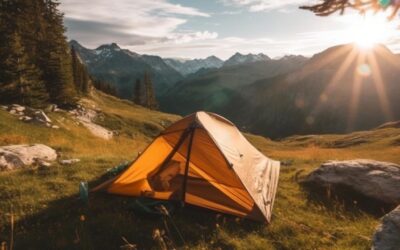
Thinking of visiting Washington State this summer? Carry your favorite camping gear because you are going to get some of the best campsites around. Here is a list of my Top 10 Campgrounds Washington state has to offer. Washington is one of the best places for those who love sleeping under the stars. All you have to do is pitch your tents, build a campfire (when we can), and start enjoying your time. There are plenty of campsites in this place, but finding the best is not an easy task. This list highlights some of the best campgrounds in Washington.

If you do plan on taking an Awesome trip to one of these Parks or Campgrounds please be prepared. Check out my other posts to help you do that here.

1. Ohanapecosh Campground – 46.7311111. 46° 43′ 52.0000″ N.

Ohanapecosh Campground provides three beautiful campgrounds located right in the heart of Mount Rainer National Park. If you need some humble getaway time in a less crowded campground, Ohanapecosh guarantees exactly that since it’s one of the most peaceful places you can visit. Apart from giving you a beautiful and friendly camping site, this spot will also expose you to the beautiful scenery of a wild river running right in the middle of the campground together with magical old-growth forests. You’ll also enjoy some hiking experience in the nature loop trail right outside the campground and see some of the biggest trees on earth. After a long walk, treat yourself to spa experience with the bubbling waters of the Ohanapecosh Hot Springs.

2. Moran State Park – 48.6650° N, 122.8240° W

Moran is one of the greatest places to camp in Washington State. Located at the San Juan Islands, this place provides the best outdoor environment, and every outdoor enthusiast will love it. While at the campsite, you can climb to the top of the small mountain and treat yourself to the beautiful scenery on the Northwest Straits.

With a total of 166 campsites, there is plenty to do in this campsite, and you’ll never get bored. Get a taste of the freshwater lakes around the area or treat yourself to some humble time on the mountain lake. Hop on a ferry and go all the way to Orcas Island and find a variety of fun things to do. You can also stroll around the lake and relax your mind as you think about how you are going to spend the rest of your vacation.

3. Colonial Creek Campground, Washington – 48.6902 N, -121.0979 W

If you love those campsites that are not yet over-utilized, then Colonial Creek located at North Cascades National Park is one of the best places you can visit. The park boasts over 300 glaciers, 400 miles of hiking trails, and 127 alpine lakes. You will never run short of things to do at this camping site. Treat your eyes to some beautiful old-growth forests, go fishing, hop into a boat, or treat yourself to some mountain climbing. If you’re camping with your family, Colonial Greek is the best place to pitch your tent. It is located near the amphitheater and the interpretive center, and you will have the opportunity to experience all the fun with your family.

4. White River Campground, Washington – 46.903° N, 121.641° W

White River, located in Mount Rainier National Park, is one of the great places to enjoy some camping time. At 4,400 feet elevation, this campsite is suitable for late summer camping. Apart from the great camping experience, you get to treat yourself to a view of mountain goats, wildflowers, and the stunning Mt. Rainier. With up to 112 camping sites, you will have easy access to trails such as Wonderland Trail and the Glacier Basin Trail.

5. Kalaloch, Olympic National Park – 47.6057° N, 124.3710° W

You will never run out of things to do at Olympic National Park. This is the best outdoor playground where you get plenty of things to do, including hiking, paddling, backpacking, among other fun activities. If you want to treat yourself to some camping experience, then Kalaloch is right inside the park, offering up to 170 campsites to choose from. You can pitch your tent anywhere you want and enjoy a silent night. If you love some oceanic view, you can walk along the oceanic stretch of the coastline and enjoy the sound of the crashing waves.

6. Deception Pass State Park – 48°24′23″N 122°38′40″W

Deception Pass State Park stands as the most viewed camp in Washington State. The park spans across Fidalgo and Whidbey Islands, which are connected by the famous Deception Pass Bridge. You can treat yourself to a walk along the saltwater and freshwater shoreline of over 100,000 combined feet. You can also hike the 37 miles of trails, pass through the coves, and see the wildlife cliff. Treat yourself to the West Beach Sand Dunes, the Kukutalki Preserve, and the Rosario Beach tide pools. There are a total of three campgrounds to choose from with a total of 167 tent sites: Bowman Bay, Cranberry, and Quarry Pond.

7. Ginkgo Petrified Forest – 46.9124° N, 119.9946° W

Ginko Petrified Forest is located near Vantage. The forest has a wide variety of petrified trees, which resulted in it being designated as a national landmark. The camp offers a unique camping environment where you can relax and spend some fun time either with friends or family. You will also treat yourself to a beautiful view of the Columbia River with more than five miles of freshwater shoreline. As if that’s not enough, the camp treats you to a 7,100 backcountry hiking experience. You have up to 50 campsites to choose from at the Petrified Forest, as well as the Wanapum Recreational Area with options for tent and RV camping.

8. Camp Disappointment State Park – 46.2936° N, 124.0642° W

Contrary to its name, there is nothing disappointing about this park as it only ensures you have maximum time during your camping trip. This is the oldest park in Washington State, but despite its age, it still makes it to the list of the top camping grounds in the state. You get to enjoy many activities during your stay in the camp, including fishing, hiking, clamming, and lighthouse tours. The hiking trails continue to improve each year thanks to volunteers of Washington Trails Association. There are several camping options available, including the popular Cape Disappointment Campground and the smaller, more secluded North Head Campground.

9. Seaquest State Park – 46.3429° N, 122.8754° W

If you want to explore and enjoy camping in the southwestern part of the state, Seaquest State Park is the place to be. Located near Mount St. Helens, this camp offers breathtaking views and a unique camping experience. You can spend your day hiking, boating, fishing, or even swimming if you visit during the summer. The park has a wide variety of plant and animal species, making it an excellent spot for nature lovers. Seaquest State Park offers various campsites, including tent sites, RV sites, and cabins, ensuring that there’s something for everyone.

10. Hoh Rainforest Campground – 47.8603° N, 123.9348° W

Located in Olympic National Park, the Hoh Rainforest Campground offers a unique camping experience surrounded by lush greenery and an abundance of wildlife. This temperate rainforest receives a high amount of rainfall, creating a vibrant and enchanting environment. Explore the moss-draped trees, fern-covered forest floor, and crystal-clear streams as you immerse yourself in the beauty of nature. The campground offers 88 sites and provides easy access to various hiking trails, including the popular Hoh River Trail.

These are just some of the amazing campgrounds you can find in Washington State. Each offers a unique camping experience and the opportunity to explore the natural beauty of the region. Whether you prefer mountains, forests, or coastline, Washington State has it all. Plan your camping trip, pack your gear, and get ready to create unforgettable memories in the great outdoors!


Top Ten Of The Best Family Tents To Stay Cozy

Top Ten Of The Best Family Tents To Stay Cozy

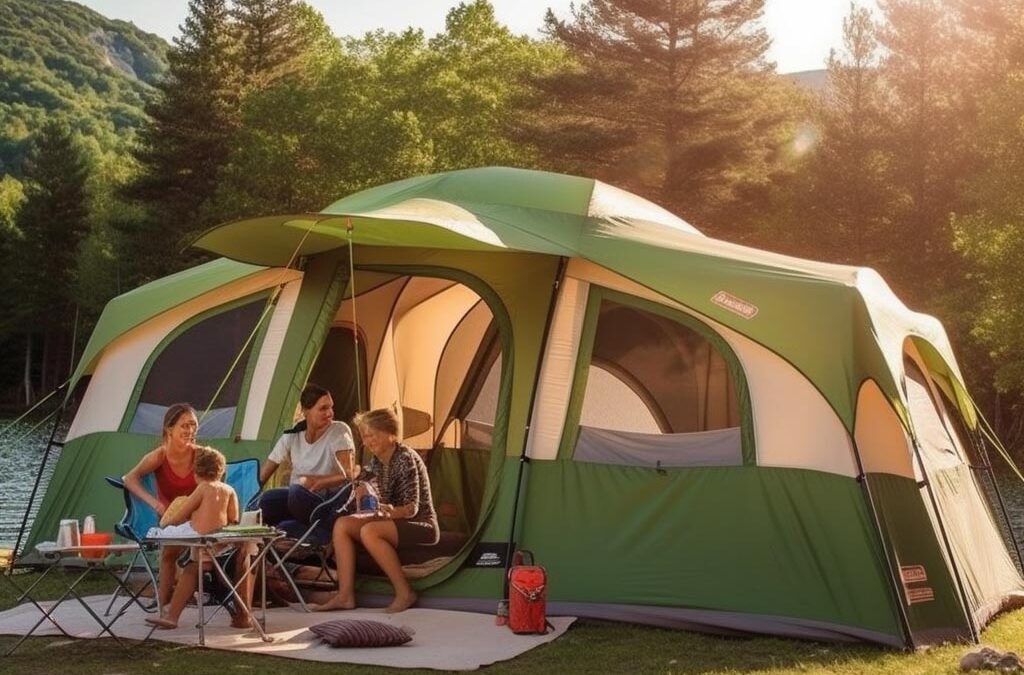
A Home Away from Home: Discovering the Perfect Family Tents

Have you ever heard of a home away from home? Nothing beats a weekend getaway to the countryside, safely tucked away in the comfort of your tent with family and friends. As enticing as the offer of camping in the wild may look, you don’t want to go ill-prepared. As much fun as you might have, when it is time to sleep, no one wants to be uncomfortable.

Take a look below at the amazing features of our family tents. Each one offers comfort, relaxation, and space to store your gear.

  1. Coleman Sundome 4-Person Tent
  • Designed for fast and easy setup in minutes
  • A ground vent and large windows for the expulsion of warm air
  • Inverted seams and patented welded floors allow you to keep dry
  • A rainfly attached to a door awning of the durable poly guard double-thick fabric is sure to protect campers from rain
  • A spacious inside accommodates a queen size air mattress
  • This tent has a storage pocket for your gear

The Coleman Sundome 4-Person tent comes with an e-port for inside electrical power. Check Price here

  1. Coleman Evanstone Dome Tent with Screen Room
  • This very spacious tent has enough room for two queen-size airbeds
  • It requires only 15 minutes for set up because of snag-free, Insta-clip pole attachments and a continuous pole sleeve
  • A separate screened room provides more ventilation and an extra sleeping area.
  • A removable rainfly accommodates stargazing or increase sunlight through the mesh roof
  • A separate screen ensures your lodge is bug-free
Check Price here
  1. Coleman Elite Montana 8-Person Tent
  • This roomy tent accommodates the entire family with space for three queen size airbeds
  • It has inverted seams with hidden needle holes and a strong windproof frame to increase weather resistance
  • This tent has a zipper cuff made of weather-resistant fabric and a waterproof floor
  • It comes with six built-in CPX LED lights for illumination when the sun goes down
  • It has an energy pack with a USB port for charging electronic devices
Check Price Here
  1. CORE 9-Person Extended Dome Tent
  • This wind/rainproof tent is reinforced with extra-wide heat-sealed tick tape
  • The interior spacing of the tent is increased with two additional ridge poles
  • It comes with a secured access point to an electrical cord for passing electrical current
Check Price Here
  1. Coleman Tenaya Lake Fast Pitch 8-Person Camping Cabin Tent with Built-in Closet
  • This tent can conveniently house up to eight people
  • It has a hinged door for easy access and illuminated reflective guy for clear visibility at night
  • It has a room divider for added privacy and storage space for safely securing your gear
  • The built-in closet has a hanger bar and shelves which allow you to neatly arrange your clothes
  • It is easy to pack for travel inside its carry bag
Check Price Here
  1. CORE 9-Person Instant Cabin Tent
  • Setup for this tent is made easy with pre-attached telescoping poles
  • A slide T-door allows access to the tent and airflow through the windows
  • A detachable room divider provides privacy when needed
  • A heat-sealed seam that runs from the rainfly to the floor ensures water does not enter the tent
  • Air intake vents on the floor draw in cool air while the hot air is expelled through the mesh ceiling
  • This tent can conveniently house nine people and their gear
Check Price Here
  1. Coleman Sundome 6-Person Dome Tent
  • Suitable for a family of six, this tent has a large door for easy entry
  • A hooded fly allows ventilation in all weather conditions
  • Cross ventilation occurs through a rear hooded window and the mesh vent on the roof to reduce condensation
  • The corner seams are welded to protect the tent from a leaky floor
  • The fly is coated with polyester for durability and ruggedness
  • This tent holds up well during a storm and high winds
Check Price Here
  1. Pacific Breeze Easy to Setup Beach Tent Deluxe XL
  • This beach tent provides an interior space to accommodate three or four people
  • An internal pocket allows you to conveniently store items
  • This tent is composed of a durable fiberglass frame and a water-resistant PE floor
  • It is compact and lightweight, weighing just over 6 pounds
  • It includes a carrying case and five sand pockets for increased stability in windy conditions
  • Even on the beach, this tent offers protection from the sun and includes a large window for ventilation
Check Price Here
  1. ALPS Mountaineering Lynx 4 Person Tent
  • The fabric of this tent is polyester to ensure resistance to water and protection from UV exposure
  • Two aluminum poles reduce the frustration of setting up this tent
  • It has two doors for easy entry and exit
  • It is fitted with two vestibules for additional gear storage and an extra-large 8-zipper
  • The factory-sealed seams and floor seals ensure protection against harsh weather conditions
  • Ventilation occurs through a mesh positioned halfway up the wall on either side
Check Price Here
  1. Everking Automatic Hydraulic Camping Tent
  • The pop-up design of this tent allows for instant setup in about 60 seconds
  • It is adequately spaced, and the outdoor frame is stable
  • This tent is made from high-quality durable material and a sturdy fiberglass frame
  • Ventilation is aided by one zipped door with a dormer window for a great view
Check Price Here

Select Your Family Tent

Whether hiking, camping, visiting the beach, or having a backyard sleepover, do not let harsh outdoor elements spoil your fun. Our selection of family tents can provide the comfort, protection, and privacy you desire. Buy now and start creating unforgettable memories with your loved ones.

Frequently Asked Questions (FAQs)

1. Can these family tents withstand harsh weather conditions?

Yes, these family tents are designed to withstand various weather conditions. They are made from durable materials and equipped with features like reinforced seams, windproof frames, and rainflys to provide protection against rain, wind, and other elements.

2. How long does it take to set up these tents?

The setup time varies depending on the tent model and the number of people involved in setting it up. However, the tents mentioned in this article are designed for easy and quick setup, ranging from a few minutes to around 15 minutes.

3. Are these tents suitable for families with kids?

Absolutely! These tents are designed with families in mind, including those with kids. They offer spacious interiors, separate rooms or compartments, and additional features like storage pockets, closets, and LED lights to enhance comfort and convenience for the whole family.

4. Can these tents be used for camping in different terrains?

Yes, these tents are versatile and suitable for various camping terrains, including forests, mountains, beaches, and more. However, it’s always important to choose a campsite and terrain that aligns with the tent’s specifications and suitability.

5. Are these tents easy to pack and transport?

Yes, most of these tents come with convenient carrying bags or cases that make packing and transportation hassle-free. They are designed to be lightweight and compact, ensuring that you can easily take them along on your outdoor adventures.

Investing in a high-quality family tent will transform your outdoor experience, providing comfort, protection, and convenience for you and your loved ones. So, select the perfect tent that suits your needs and embark on exciting adventures while creating cherished memories that will last a lifetime.

10 Mind-Blowing Solo Tents That Will Revolutionize Your Adventure Game

10 Mind-Blowing Solo Tents That Will Revolutionize Your Adventure Game

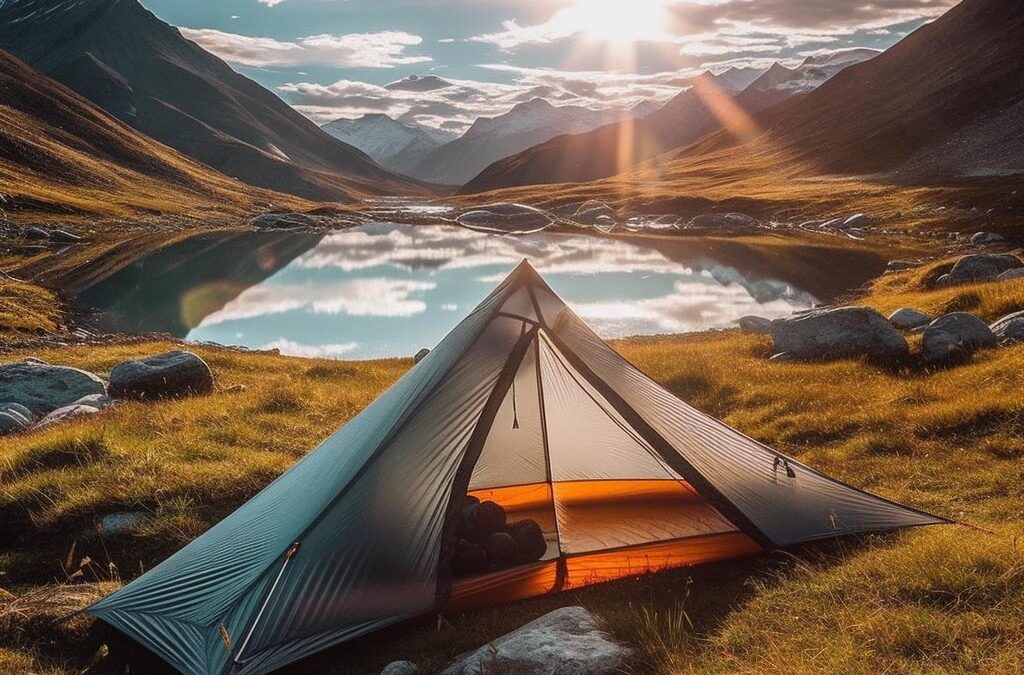
Top 10 Solo TentsEmbarking on a camping adventure but want to have the same bedtime comfort you have at home?No need to worry. We have your home away from home.Whether camping with your friends or relaxing at the beach, our one-person tents will make your experience a pleasurable one.  Take a look below at the amazing features of our top 10 solo tents
  1. Kelty Salida Camping and Backpacking Tent
  • So light-weight – it feels like you’re not carrying anything
  • An easy set-up that saves you time
  • An interior space that provides a comfortable home experience
  • A polyester wall and nylon floor allow durability for three seasons each year
  • It’s waterproof and comes with an internal storage pocket
  • Color-coded clip and fly attachment
  • A wide D-door and fully seam-taped construction
 BUY NOW
  1. SnugPak the Ionosphere
  • Very small 1-person camping tent that protects you from the elements
  • A single entrance and completely taped seams
  • DAC feather lit NSL anodized poles with press-fit connectors
  • Flysheet is a lightweight 210t Polyester ripstop up
  • Constructed inside with nylon polyester mesh
  • 5000mm waterproof polyurethane coating
  • Comes with an on-the-go repair kit
 
  1. Featherstone Outdoor UL Granite Backpacking Tent
  • Very spacious, lightweight tent, and ultra-light set-up
  • Rugged with long-lasting durability for three seasons each year
  • Its safe rainfly provides superior protection from the wind and rain; great for use with its lasting waterproof footprint
  • A compression-folded stuff sack for easy packing and minimal pack size
  • Single aluminum pole structure for relocation without disassembling
 
  1. Geertop 1-person Backpacking Bivy tent
  • Lightweight, portable, and compact enough to fit into your backpack
  • Easy assembly and break-down makes it perfect for new and experienced users
  • Constructed of two aluminum folding poles, nine aluminum tent pegs, and windproof ropes
  • Double-stitched seams and taped seal
  • Two doors and two windows for increased airflow throughout
  • A built-in mesh that protects against bugs and insects.
aluminum 
  1. Winterial Single Person Tent
  • Flyless makes this tent is perfect for a warm summer night
  • Securely attached rainfly makes it great for the rainy nights
  • 14 heavy-duty stakes are unstoppable, even on tough ground
  • This bivy tent has three bundles of strong cord.
  • A ventilated roof mesh with a full-coverage rainfly
  • It is perfect for hiking and any trip.
  • Long-lasting durability for three seasons each year
 
  1. Flytrap Bubble Tent
  • Lightweight and easy-to-carry tent
  • Inside top light hanger and window for good air circulation
  • A floor made of fabric PU waterproof coating
  • Its inner and outer body is made of polyester
  • Easy one-person setup
 
  1. Teton Sports Outfitter XXL Tent
  • This tent has instant set-up and take-down with just the push of your thumb
  • A built-in zipper guard and guy wires for staking in high wind
  • A micro-mesh inner with waterproof rainfly
  • Built to give you a perfect view of the outside right from the inside
  • Both tent and rainfly are constructed from 2000mm treated taffeta with flame retardant and water-resistant coating
 
  1. River Country Product Trekking Pole Tent
  • This one-person tent is comfortable for two
  • “No pole; no problem” – this tent works with sticks or trekking poles and between trees
  • Comes with eight ultra-light aluminum stakes and a carrying bag
  • Unexpected features include a personal item pouch and a corner loop for hanging a lantern
  
  1. ALPS Mountaineering
  • This polyester UV resistant tent has meshed walls for increased ventilation
  • The fly and floor seams are factory-sealed to prevent cuts
  • It has one vestibule for extra storage space
  • The easy to use clips quickly snap over the poles.
 
  1. MSR Fly Lite
  • This ultra-light tent is made for one but can accommodate two people.
  • A great choice for couples seeking a wicked-light shelter for appropriate conditions
  • Its well-vented large door, for easy entrance and increased airflow, has a protective storm flap
  • Its walls are made of dura shield coated nylon which lasts longer than a traditional polyurethane coating.
  • Setup in as little as 30 seconds
  • It is strong enough to withstand 40-mph wind
  • Perfect in time of rain for storing your gear.
 Adventurous? Want to enjoy every moment you spend inside your tent? Worry no more!No matter what level of fun you are looking to have, we have the tent to give you a restful experience at bedtimeSELECT YOUR SOLO TENT These high-quality Solo tents can protect you from the outdoor elements and give you the privacy you want; all while delivering an unparalleled camping experience.BUY NOW 
How to Make A Campfire: A Beginners Guide to Flame!

How to Make A Campfire: A Beginners Guide to Flame!

Why is a Campfire Important

A lot of people see the time spent around the campfire as the soul of the camp. Perhaps they’re exaggerating a bit, but we understand the importance of the campfire.

Camping isn’t complete without a campfire. Aside from the warmth generated by the dancing flame, lots of camping activities are only made available by having a fire.

  • Cooking Food (Smores)
  • Boiling water (Coffee)
  • Drying Wet Clothing and Gear (Rain)
  • Lighting Camp (Darkness)
  • Raising spirits (nerves)

Not only does it give you a physical attribute as heating there is a mental side as well. It helps make you feel safe and secure. At least In my mind.

keeping the critters away at night is a significant effect fire has as well. I don’t know of many animals that will come toward a camp that is lit by a campfire. (honestly, I don’t know any critters, just an example…;)

Starting  A Fire

Knowing how to start a campfire is a skill you should know before going camping. In this piece, we will explain how to start a campfire and the different styles to accomplish this.

Before we go into the ABC’s of how to start a campfire, a little insight on the chemistry of fire itself will help your case a little.

Speaking of ABC’s a fire needs three core elements; Oxygen, fuel source, and heat. Once these three elements combine in the right order, They create a chemical reaction known as Fire!

Campsite planning

The Fire Triangle

They call it The Fire Triangle, it is the basic chemistry behind a flame.

  • Oxygen (O2)
  • Fuel (Wood – Fuel)
  • Heat source (Ignition – Spark)

The fuel source could range from papers, oils, to chunks of dry leaves. But for a campfire, dry wood is the standard used fuel.

Campfire Location

Depending on the location of the campsite you might have to improvise accordingly. In the warmer times of the year, just about everything can serve as fuel.

Of course, we don’t recreate only in those times and moisture may cause issues when using natural resources in the wetter and colder months.

Natural Resources

If you are camping in the forest and it has been dry, you will most likely not have an issue finding fuel for the campfire. Small twigs to dead trees will be abundant most of the time.

( Check your local burn bans and code at your local forestry dept.)

If you are camping next to water sources or up in the mountains with heavy snowfall the resources might be more on the damp side and finding burnable fuel can become a very stressful situation if your campfire experience is low.

MORE | Tents or Hammocks?

Other Essential Tips

Be prepared the best you can. Bring waterproof matches; a lighter, a striker, a magnesium strip, anything you can bring along that can help your situation if you get yourself in a bit of trouble will go along ways.

To create a campfire, you need to have the necessary resources. Take a tour of your surroundings and see what you can find.

Wood will mostly be available, but its condition will depend on the weather situation around the area.

Getting a campfire started doesn’t just involve stacking some limbs or fallen trees onto a fire ring and lighting it on fire.

This style can work, don’t get me wrong, to sustain a fire it needs to be nurtured and done in a way you will not run out of fuel to fast, and it won’t go out due to the elements.

Successful campfire building in the wilderness requires some fundamentals you must have to start one. We will take a look at them now!

Fuel Gathering

Situations

The speed and effectiveness of starting your fire will largely depend on your level of preparedness and ability to gather fuel. This will depend of course on your circumstances.

If you become lost and you are not prepared for this, the whole situation becomes dire, and the need for fire becomes almost an emergency, in some instances.

Finding fuel in this type of situation is stressful and can be dangerous. If its dark out and you can’t see anything finding just the minimal amount of resources to get the fire going should be a priority. (Try and gather plenty of fuel to burn long enough to be able to get more though.)

Once a fire is started, and you have light then you can find more resources easier. Remember speed will be a factor. Fire burns quickly, and you need to keep it fueled.

Although if your camping with friends and family or on a hunting trip, the situation entirely changes and is more laid back and your fire starting necessity may not be as urgent.

Many time fire fuel is brought with us in these instances and fire starting becomes a fun activity we can share with friends and family. (One of my favorite things is to watch my children practice these skills)

Materials

Wood Wood is an essential element is necessary for all campfires. It can be small scrapes, strips, shavings or logs. Regardless of their form or shape.

It would be best if you seek out the driest logs and pieces of wood. This will save you from the stress of having to expend more energy and resources trying to get through the wet exterior.

(It is possible to burn damp wood it is just incredibly time-consuming and challenging)

There are different names used for referring to wood resources based on their size or their sources, and for your campfire, you sure will need most (if not all) of them.

Tinder – material that will take the initial ignition and become the start of the fire. Usually a small dry substance such as dry tree needles, moss, or wood shavings, etc.. (Burn approximately 10-30 seconds)

Kindling – small twigs and branches generally under 2 inches in diameter and about 8-12 inches long. This is the “get the fire going” material. (burn approximately 1-4 mins each.)

Limbs and Branches –  Larger diameter wood that has fallen from trees to the ground and can be cut up into 12-20 inch lengths.  (burn approximately 20-30 mins each.)

Logs – fallen tree trunks that can be bucked up into long-lasting firewood. Usually, 4-24 inches in diameter does take longer to process but also burns much longer. (burn approximately 30min -2 hours each Depending on size.

Warning – Please respect our wilderness areas and unless it is an emergency do not cut down, limb, or break wood off living trees. The wood sucks to burn anyway and its devastating to the environments. Just a thought.

MORE | Hatchets

A heat/fire source Having a good ignition source will increase your fire making abilities by a lot. Don’t rely on one type of source either. Make sure to have a few options in your gear.

Waterproof matches Can be purchased for your camping gear and should be in everyone’s kit for emergencies. Depending on your source they can work or they might not.

Butane Lighters (Bic) These also can be put into your camping gear to help with fire starting. This is the way most people will be able to get a fire started quickly and easily. The downfall is that one they get wet they are garbage.

Strikers (Ferro of, Magnesium strip, fire steel), All of these, are for emergency uses and can work when wet. (Most of the time).

Friction Fire (bow drill, Hand drill, etc.) These are more of a primitive and last form of survival technique to get a fire going. Unless, you know how these styles work and have used them, achieving fire this way is extremely difficult.

SETUP

After securing all the materials that you will need for your campfire, the next logical thing to do is to set up the fire.

You have your wood and other fuel sources; you have your ignition, now is the time to put the materials together and get the fire you need to be started.

However, to have a good flame, you must take the time to prepare your campfire site. This involves taking some necessary precautionary actions and clearing the area of materials that could prevent the setup of a good campfire.

Clearing and setting Is there an existing fire ring (a spot where previous fires have been made)? Go on and clear away the cold ash and charcoal.

Doing this will present you with enough room to arrange your wood and fire materials for the new burn. You may leave the old ashes at the edge of the ring or do away with them altogether. Depending on how cold and damp they are they could affect the new fire.

If there is no existing fire ring, you will need to clear out a spot for your campfire – this would mean that you will have to remove dead grass, vegetation around your chosen place.

Using your shovel, lightly scrape off the soil from the fire ring, and keep it nearby in case of an emergency.  You are free to use the freshly removed earth as a border fence for your fire ring, or you may choose to use rocks (recommended).

I always try to use rocks, and if necessary use the earth that’s been dug up to fill in gaps.

(Be aware of your surrounding don’t be that person that starts a wildfire that burns people out of their home)

Burn it up!

Structure

At this point, you have cleared your fire ring, and you are ready to start setting up your kindling and wood for the fires. Some fire types are best suited for different occasions.

Before we go on to discuss them, take your tinder as we talked about above or some light wood, paper material, cardboard and place them at the center of the fire ring, it shouldn’t be more than a foot in diameter.

Now to the fire! Most people do not realize that there are several forms of campfires, and each has a specific purpose that they serve.

The following are some campfire types you can set up and their designated functions.

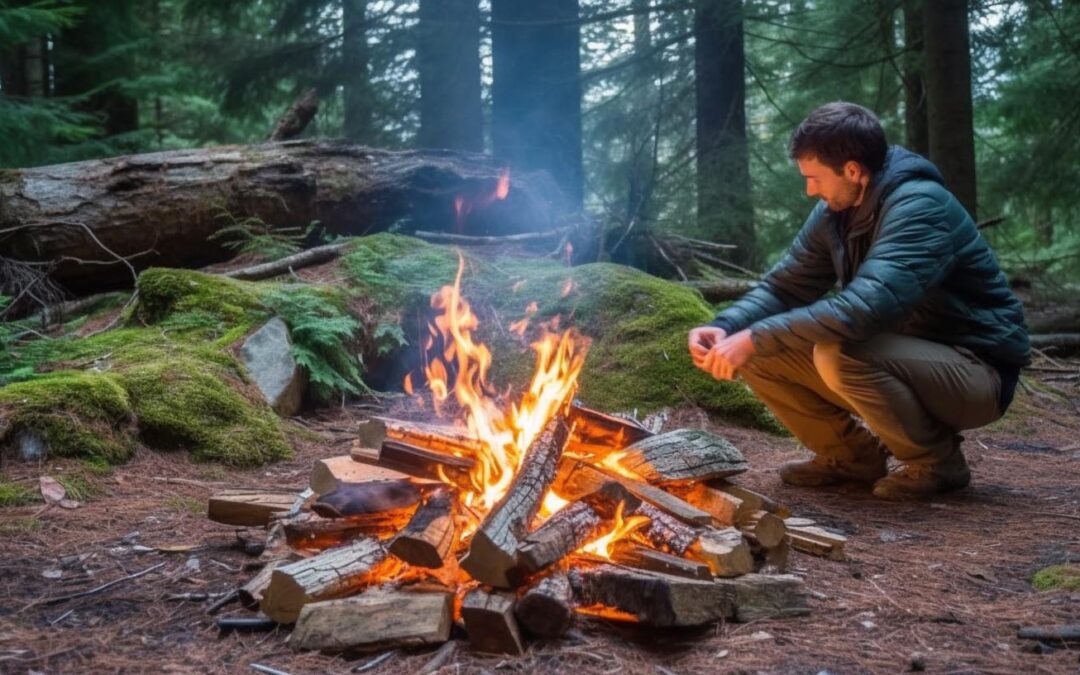
Log Cabin Fire – This is a fire that is intended to last long. It is great for long nights in the winter.

Lean-to-Fire – This is a fire type that is great for cooking. It is not meant to last long. Use small pieces of kindling and tinder to start the flames and then add more wood as the fire grows.

Teepee Fire – The Teepee fire is great for cooking. All you need to do is to arrange the sticks in a teepee above the position of the tinder.

Cross Fire – Also suitable for fires that are meant to last for a while, the Cross Fire differs in wood arrangement slightly as the wood pieces are placed in a criss-cross manner.

Ignition

On to the final part of it all and that is lighting the fire.

Keep kids and pets away by a safe distance before you set fire to the tinder. Light it up from several edges. This ensures the tinder lights up quickly.

Never use gasoline regardless of the circumstances you might find yourself. Gas is extremely volatile, and the situation could escalate rather soon especially when in the woods.

All Done?

When you’re through, and the fun is over, ensure that you thoroughly and exhaustively put out the fire.

Do these strategies to avoid problems. Gently sprinkle water onto the flame. As you continue doing this, watch the embers and stir them gently while pouring more water. Continue until you can no longer hear the hissing sound of the embers.

That’s it; you’re good to go.

Quick and Easy Camping Meal Ideas: Perfect for Families!

Discover a variety of camping meal ideas for families, outdoor enthusiasts, and foodies alike. Embrace the convenience of one-pot wonders and the magic of campfire cooking while enjoying nature’s embrace.

Top Camping Lanterns of 2023: Ultimate Guide to Transform Your Nights Outdoors

Here are our choices for this years top Camping lanterns!   Welcome to our ultimate guide to the top camping lanterns of 2023! If you're an...

Discover the Magic of Leave No Trace Principles for Camping

Camping is a great way to get closer to nature, explore new places, and bond with friends and family. However, it also brings the responsibility of respecting nature and preserving it for future generations. This is where Leave No Trace principles come in – a set of guidelines designed to help campers minimize their environmental impact while enjoying the great outdoors.

Weightless: An In-Depth Look At Ultralight Tents

Experience the freedom of ultralight camping with portable and lightweight tents.

Dispersed Camping: How To Rough It For Newbies

Step off the beaten path and immerse yourself in the untamed beauty of dispersed camping. Embrace the freedom, solitude, and serenity that await as you create your own adventure in the great outdoors.

A Comprehensive Guide to the Best Backpacking Stoves

Explore different types of backpacking stoves and factors to consider when choosing the right one

Cozy Secrets Revealed: Unraveling the Magic of Mummy Sleeping Bags

Explore the world of mummy sleeping bags and uncover their cozy secrets. Learn about insulation types, temperature ratings, and more to find the perfect sleeping bag for your outdoor adventures.

The Ultimate Camping Checklist

Planning a camping trip? Don’t forget to pack these essential outdoor adventure items. A detailed camping checklist will ensure you have everything you need for a stress-free and enjoyable experience in the great outdoors.

How To Camp In The Desert: A Non Expert Guide

How To Camp In The Desert We were out camping this weekend in the Gifford Pinchot National Forest. Right now there's a statewide fire ban, so a...

Pitch Perfect: Your Ultimate Guide to Setting Up a Tent

Learn how to set up a tent like a pro with our step-by-step guide. Find the perfect spot, pick the right tent & master the art of pitching for ultimate camping success.

Us at the columbia river
Campsite planning Logo

This site is operated by Docslys Design, which is a participant in the Amazon Services LLC Associates Program, an affiliate advertising program designed to earn advertising fees by linking to Amazon.com.

Tent or Hammock? What’s the Difference?

Tent or Hammock? What’s the Difference?

Tent or Hammock? What’s the Difference?

When you go on a camping trip what is the form of shelter you prefer? I have been a tent man my whole life, and I don’t expect that to change. A buddy of mine swears up and down that a hammock is the way to go. How about we take a good look at the two and see which is better or worse for you!

Tents are far from ideal. There are lots of things to consider with the use of the tent. From finding the perfect campsite to the fear of the unknown, the list is endless. But we have warmed up to it.

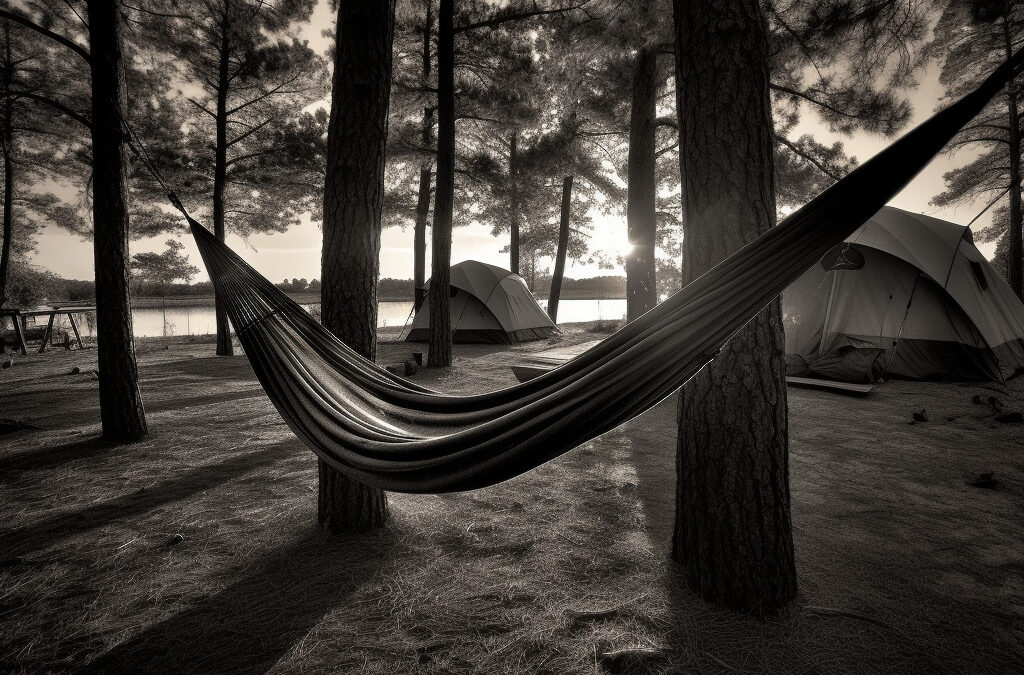
Then there’s the hammock. This tent – the alternative is hinged on an arboreal lifestyle. Yes, you read that right. You’d have to take a nap on a synthesized material supported by trees. As crazy as that sounds, many are making the switch without looking back.

What makes these two camping accessories different? Let’s find out.

The Differences in Setup

The most conspicuous difference between the use of the tent and hammock is tied to their setup.

With a tent, it’s all about searching for the right surface – no flooding, possible animal invasion nor awkward terrain. It has to be perfect or at the very least, close enough.

The setup of a hammock couldn’t be any different. This camping approach is heavily dependent on trees.

To camp in a hammock, you’d have to find the right trees. Besides proximity, these woody plants have to be strong enough to support your weight.

No exceptions! This shouldn’t come as a surprise since the hammock material is tied to both trees.

With a hammock, the action on the ground isn’t much of a concern to you – unless of course, it affects the supporting trees.

More | Camping in the Desert

The Weight Factor

Tents are usually heavier than hammocks. They are built to withstand the elements while camping. It’s like taking your home along in a backpack. With structural components consisting of cotton, nylon, and polyester, the tent is bound to be heavy especially when it rains.

While this will add to the burden of transportation, it keeps you safe from the weather.

With the hammock, things take a different turn. Weight isn’t much of an issue with this camping accessory.

Most hammocks are made from nylon which improves their tensile strength. The only issue is you’re at the mercy of the weather.

Innovation appears to have taken the outdoor market by storm offering products which can keep the elements at bay and providing the warmth you need.

However, these accessories could add to the weight of your backpack.

Size

One area where the tent seemingly triumphs over the hammock is size. Tents come in varying sizes. Depending on its dimensions, a tent can hold as many as four persons comfortably.

While weight might be an issue, there’s that closeness a tent breeds especially among family members.

Hammock users are not necessarily loners, but this camping accessory is about getting the privacy you need. Hanging out alone on support anchored by trees doesn’t exactly engender togetherness.

Yes, camping hammocks are available in various sizes, but they can support just one person comfortably – lovers might differ in this regard.

Time Constraint

Camping might be that place where time seems to stop. Being surrounded by nature has a way of making time irrelevant.

Even so, there are occasions when you have to set up or dismantle your tent/hammock for different reasons such as personal issues or weather conditions.

This is when you’d observe some small differences. For a tent, you could spend a few hours putting it together or dismantling it.

This will also depend on the size of the tent. Bigger tents will take more time especially if you are handling this alone.

Unlike tents, hammocks are easier to set up and dismantle. All you have to do is tie or untie the straps. This should only take you some minutes to complete.

However, the use of accessories such as the tarps and sleeping pad could add to the time spent.

MORE | How to Make a Campfire

The Change factor

The condition of your preferred campsite can change within hours of making that choice. You could sleep under cover of a tent and wake-up in a waterlogged space. Often, there’s the need to change tent positions due to the unforeseen situations. If it’s a rather large tent, then there’s a problem.

With a hammock, there’s a lower chance of surprises springing up. Having the straps of a hammock tied to the stem of trees wouldn’t put you in harm’s way if you did your homework.

No, snakes wouldn’t lunge down on you from above – real life isn’t the same as the movies. In fact, the odds of that happening are higher in a tent since more snakes are adapted to a land-dwelling habitat than an arboreal one.

Adaptability

Who wants more from their tent? Everyone. We can’t just carry around a bulky tent and get only a roof above our head. Sadly, that’s the way it is.

Innovation might be making inroads into the outdoor niche but the flexibility of the tents seems to have been missed.

The modern-day tent isn’t as adaptable as it should be. Aside from providing some sort of protection against the elements, its functions are greatly limited.

The adaptability of the tent fizzles out when compared to the hammock. The latter has a wide range of uses. Besides acting as a resting place, it’s the perfect spot for grooming your reading culture.

Many regard the hammock as an epitome of improvisation, and it’s not difficult to understand why.

The Impact of Water

The undoing of every tent is the presence of water on the surface of a campsite or the closeness of a water source. This reduces the number of potential sites for the location of your tent.

Regardless of how alluring an area might be, water can bring all that to naught. Also, you can’t enjoy the view of water bodies from a resting place.

Water isn’t a problem when resting on the hammock. From such an arboreal position, chances are you’d be unaware of the emergence of water onto the land below.

Also, you can enjoy the beauty of water bodies without fear of the condition on the ground around.

Comfort

This is one of the strengths of the tent. With its structural build, the tent provides some semblance of warmth.

Spending a cold night in a tent might not be exactly splendid, but it supersedes whatever a hammock has to offer in this regard. The absence of several openings in the tent reduces the impact of the elements on a cold rainy night!

The hammock and warmth are seen as oil and water – they don’t mix. With the level of exposure observed in the hammock, it’s difficult to argue with that.

However, innovative products like the underquilt, and sleeping pad have brought some relief to worthwhile camping gear.

Similarities Shared by Tent and Hammocks

The similarities common to both the tent and hammock could be based on their composition and function.

From a functional perspective, they provide a resting place for you when camping.

As regards the structural constituents, both tents and hammocks share the same base materials. Nylon, polyester, and cotton are some of the materials used.

Another similarity between the tent and the hammock is the level of customization possible with both camping gears.

These accessories can transform your desired camping gear into a warm safe house.

Final Thoughts

Tents and hammocks have all the attributes required to make camping less hazardous. But the hammock has shown signs of offering much more than the tent.

Accessories can erase Even its current flaws. While the tent is the pinnacle of our camping days both present and past, the hammock has the future in its sights.

Related Articles

Ultimate Guide to Best Double Sleeping Bags for Cozy Camping

Ultimate Guide to Best Double Sleeping Bags for Cozy Camping

Discover the importance of a good night’s sleep while camping and how double sleeping bags can enhance your outdoor experience. Explore the benefits, top features to look for, and check out our recommendations for the best double sleeping bags on the market. Stay warm, comfortable, and connected with your camping partner for a memorable adventure in nature.
Sleeping Bags for Extreme Weather: Your Ultimate Guide

Sleeping Bags for Extreme Weather: Your Ultimate Guide

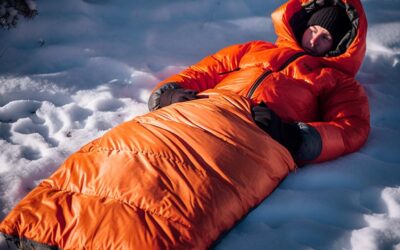
  The Importance of a Good Sleeping Bag for Cold Weather Camping Camping in extreme weather conditions can be a thrilling adventure, but it also requires careful planning and preparation. One of the essential items you need to consider is your sleeping bag. A...